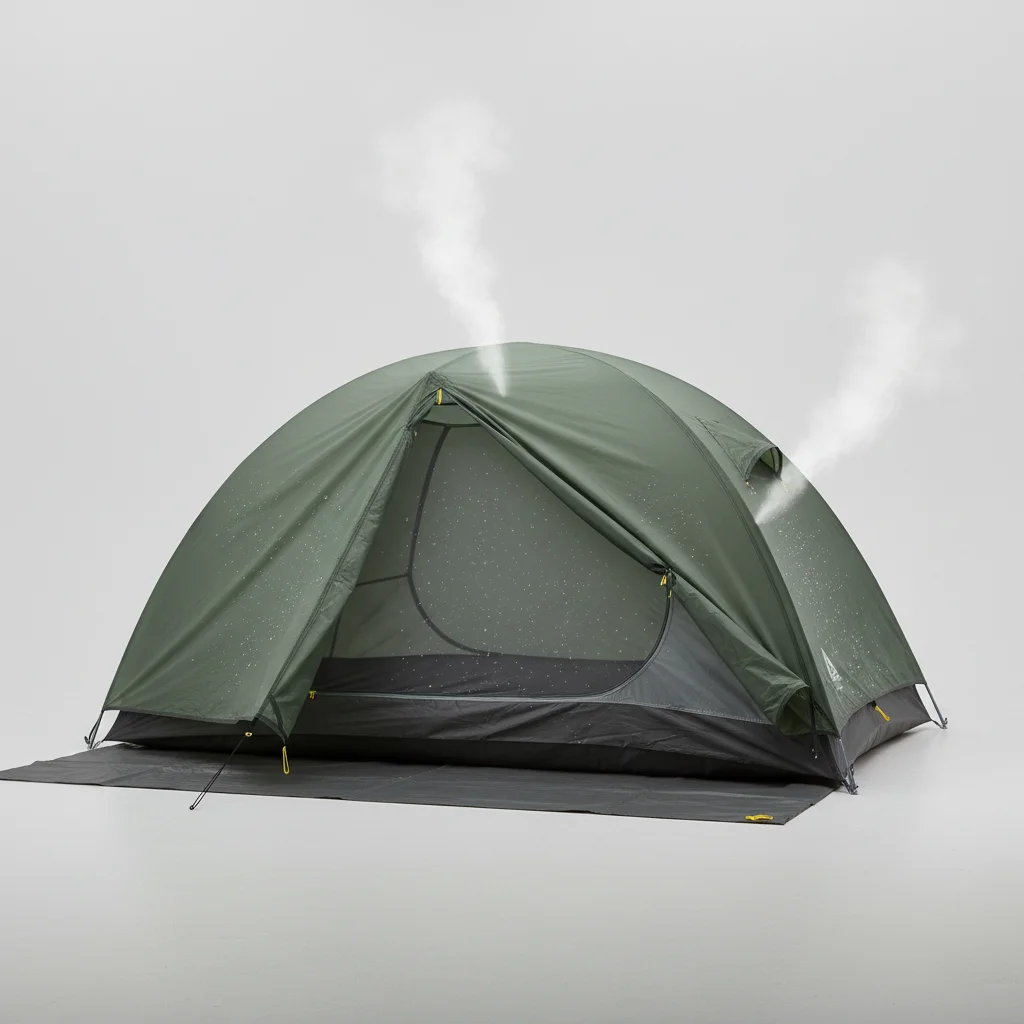
Camping tent condensation is a common issue that can make your outdoor experience uncomfortable, but it can be stopped completely with a combination of proper ventilation, site selection, and moisture management. Understanding the causes of condensation—primarily the difference in temperature between the inside and outside of your tent, combined with moisture from breath and damp ground—is the first step to preventing it. By implementing a few key strategies, you can ensure a dry and pleasant night’s sleep.
Understanding the Science Behind Tent Condensation
Condensation occurs when warm, moist air inside your tent comes into contact with cooler surfaces, such as the tent walls or ceiling. The air cools rapidly, causing the water vapor it holds to turn back into liquid water droplets. This process is similar to how a cold drink glass sweats on a warm day. Sources of moisture inside a tent include your breath (an adult can exhale up to a liter of water overnight), wet gear, and moisture evaporating from the ground beneath your tent. Without adequate airflow, this moisture has nowhere to go, leading to a damp interior. For compare top camping tents on this site.
Optimizing Ventilation to Combat Moisture
The most effective way to prevent camping tent condensation is to maximize ventilation. Many modern tents are designed with multiple vents, mesh windows, and dual-layer construction (a tent body and a rainfly) specifically for this purpose. Even in cold or rainy weather, it’s crucial to keep vents open as much as possible. If your tent has adjustable vents, open them fully. For tents with mesh panels, consider leaving a window or door partially unzipped, protected by the rainfly, to allow air to circulate. Cross-ventilation is key, so try to create a path for air to flow in one side and out the other.
- Keep all tent vents and mesh windows open, even in cool weather.
- Ensure the rainfly is not touching the inner tent body to allow airflow.
- Position your tent to take advantage of natural breezes.
- Avoid sealing your tent completely, even during rain.
- Consider a tent with multiple doors and large mesh panels for superior airflow.
Strategic Site Selection and Ground Moisture Management
|
Our Picks for the Best Camping Tent in 2026
As an Amazon Associate I earn from qualifying purchases.
|
||
| Num | Product | Action |
|---|---|---|
| 1 | Tents for Camping 2/3/4 Person with Rainfly - Camping Tent Waterproof Windproof Easy Setup, Portable Double Layer Outdoor Dome Tent, Backpacking Tents for Adventure Backyard Hiking |

|
| 2 | Amazon Basics Camping Tent, 3-Season Dome Design with Rainfly |
|
| 3 | CAMPROS CP Tent 8 Person Camping Tents, Weather Resistant Family Tent, 5 Large Mesh Windows, Double Layer, Divided Curtain for Separated Room, Portable with Carry Bag |
|
| 4 | Golabs 3 Person Camping Tent w/ 9.5x8.5 ft Canopy, 3-Minute Setup by Pre-Attached Pole, PU1500mm Waterproof, 4 Side Mesh Tent Top & Door & Ventilation, Portable Family Tent w/Carry Bag & Pocket & Hook |
|
| 5 | Night Cat Pop-up Camping Tent: 2 Person Tent Waterproof Instant Easy Setup Family Tent |
|
| 6 | FanttikOutdoor Camping Tent 4/6/8/10 Person Instant Cabin Tent Setup in 60 Seconds with Rainfly & Windproof Portable with Carry Bag for Family Camping & Hiking |
|
| 7 | Coleman Sundome Camping Tent with Rainfly, 2/3/4/6 Person Tent Sets Up in 10 Mins, Weatherproof Shelter for Camping, Festivals, Backyard, Sleepovers, & More |
|
| 8 | 2-3 Person Camping Tent, Instant Pop Up Tents for Camping - 40s Automatic Easy Setup Tent with Rainfly, Double-Layer 3500mm Waterproof & Windproof Instant Tents for Hiking Backpacking |
|
| 9 | Coleman Sundome Camping Tent with Rainfly, 2/3/4/6 Person Tent Sets Up in 10 Mins, Weatherproof Shelter for Camping, Festivals, Backyard, Sleepovers, & More |
|
| 10 | Coleman Sundome Camping Tent with Rainfly, 2/3/4/6 Person Tent Sets Up in 10 Mins, Weatherproof Shelter for Camping, Festivals, Backyard, Sleepovers, & More |
|
Where you pitch your tent plays a significant role in condensation prevention. Avoid setting up camp in low-lying areas, near bodies of water, or in dense vegetation, as these spots tend to have higher humidity levels and less airflow. Instead, choose higher ground with good drainage and exposure to gentle breezes. Using a tent footprint or ground cloth is also essential. This barrier prevents moisture from the ground from evaporating into your tent. Make sure the footprint is slightly smaller than your tent floor to prevent it from collecting rain and channeling it under your tent.
For an excellent ground barrier, consider thewhich offers superior moisture protection and durability.
Managing Internal Moisture Sources
Beyond ventilation and site selection, actively managing moisture sources inside your tent can make a big difference. Avoid bringing wet clothes, boots, or gear inside your tent if possible. If you must, hang them in a vestibule or near a vent where they can dry without adding excessive humidity to the main sleeping area. If you’re cooking near your tent, ensure the steam is directed away from the entrance. For those camping in very cold conditions, a small, battery-operated fan can help circulate air and reduce condensation, though this is less common for typical camping.
To help keep your gear dry and organized, theis a highly recommended option for its waterproof features and spacious design.
Additional Tips for a Dry Tent Interior
Even with the best practices, some minimal condensation might occur, especially in challenging conditions. If you notice condensation, wipe down the interior walls with a small towel in the morning. Wring out the towel outside the tent. When packing up, always ensure your tent is completely dry to prevent mold and mildew, which can also contribute to a damp environment and damage your tent over time. If you have to pack a wet tent, unpack and dry it thoroughly as soon as you get home.
