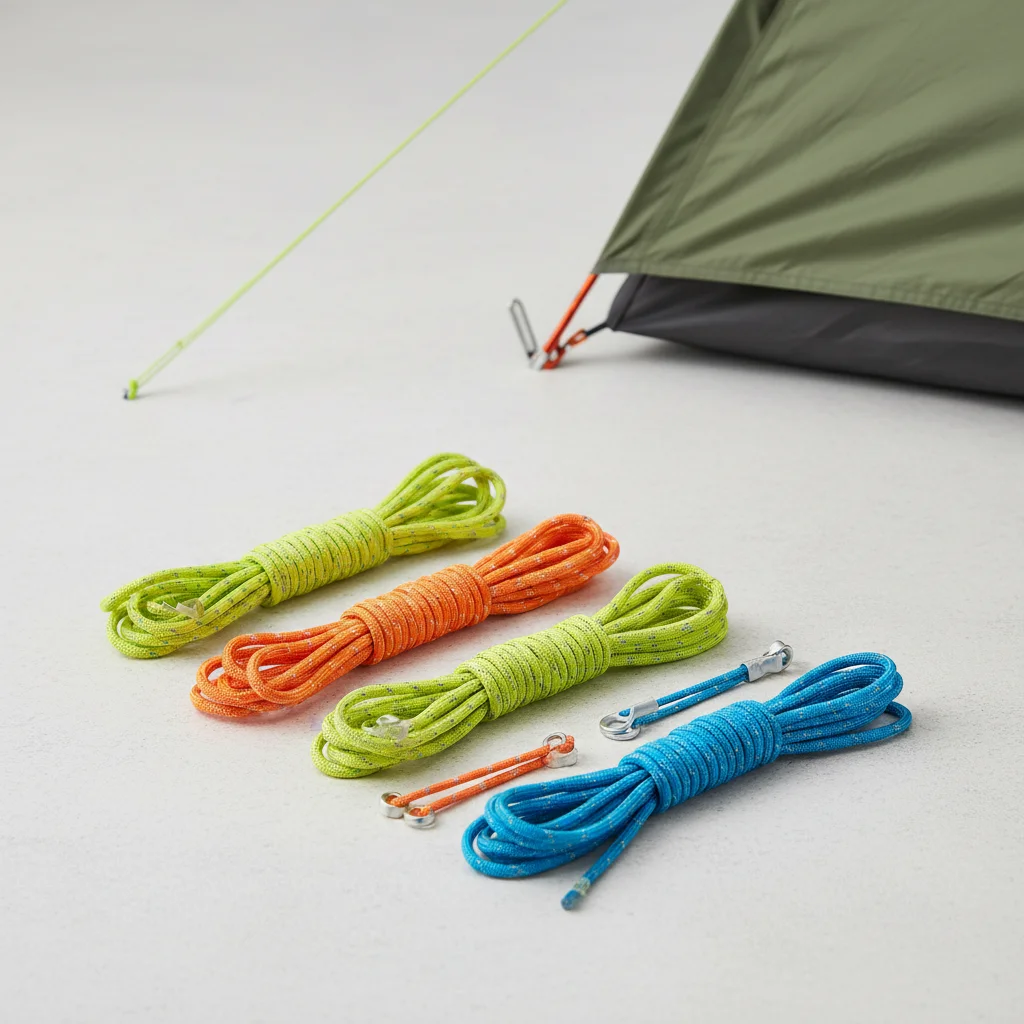
Camping tent guy lines are essential for securing your tent against wind and improving its structural integrity. While some smaller tents might seem stable without them, most tents benefit significantly from proper guying, especially in adverse weather conditions. They distribute tension across the tent fabric, preventing damage and ensuring a more comfortable and safe camping experience.
Understanding the Purpose of Guy Lines
Guy lines, also known as guy ropes, are cords that extend from various points on your tent to stakes in the ground. Their primary purpose is to add stability and rigidity to the tent structure. They pull outward on the tent fabric, creating tension that helps the tent resist strong winds and prevents it from collapsing or deforming. Without guy lines, even a well-pitched tent can become a sail in a gust of wind, leading to bent poles or torn fabric.
Beyond wind resistance, guy lines also play a crucial role in maintaining the tent’s shape and maximizing its internal volume. By pulling the tent walls taut, they prevent sagging and ensure that the rainfly remains properly spaced from the inner tent, which is vital for ventilation and preventing condensation buildup.
When Are Guy Lines Absolutely Necessary?
Guy lines are absolutely necessary in several scenarios. If you anticipate any wind, even moderate breezes, using guy lines is highly recommended. For camping in exposed areas, at higher altitudes, or during seasons known for unpredictable weather, they are non-negotiable. Larger tents, especially those with a cabin or tunnel design, inherently have more surface area exposed to the wind and thus require more extensive guying to remain stable.
Even in seemingly calm conditions, sudden gusts can occur. It’s always better to be prepared than to wake up to a damaged tent. Consider the type of terrain as well; rocky or uneven ground can make a tent less stable, increasing the importance of guy lines.
Choosing the Right Guy Lines and Tensioners
|
Our Picks for the Best Camping Tent in 2026
As an Amazon Associate I earn from qualifying purchases.
|
||
| Num | Product | Action |
|---|---|---|
| 1 | Amazon Basics Camping Tent, 3-Season Dome Design with Rainfly |

|
| 2 | CAMPROS CP Tent 8 Person Camping Tents, Weather Resistant Family Tent, 5 Large Mesh Windows, Double Layer, Divided Curtain for Separated Room, Portable with Carry Bag |
|
| 3 | Night Cat Pop-up Camping Tent: 2 Person Tent Waterproof Instant Easy Setup Family Tent |
|
| 4 | Coleman Sundome Camping Tent with Rainfly, 2/3/4/6 Person Tent Sets Up in 10 Mins, Weatherproof Shelter for Camping, Festivals, Backyard, Sleepovers, & More |
|
| 5 | Tents for Camping 2/3/4 Person with Rainfly - Camping Tent Waterproof Windproof Easy Setup, Portable Double Layer Outdoor Dome Tent, Backpacking Tents for Adventure Backyard Hiking |
|
| 6 | 2-3 Person Camping Tent, Instant Pop Up Tents for Camping - 40s Automatic Easy Setup Tent with Rainfly, Double-Layer 3500mm Waterproof & Windproof Instant Tents for Hiking Backpacking |
|
| 7 | Coleman Sundome Camping Tent with Rainfly, 2/3/4/6 Person Tent Sets Up in 10 Mins, Weatherproof Shelter for Camping, Festivals, Backyard, Sleepovers, & More |
|
| 8 | Golabs 3 Person Camping Tent w/ 9.5x8.5 ft Canopy, 3-Minute Setup by Pre-Attached Pole, PU1500mm Waterproof, 4 Side Mesh Tent Top & Door & Ventilation, Portable Family Tent w/Carry Bag & Pocket & Hook |
|
| 9 | Coleman Sundome Camping Tent with Rainfly, 2/3/4/6 Person Tent Sets Up in 10 Mins, Weatherproof Shelter for Camping, Festivals, Backyard, Sleepovers, & More |
|
| 10 | FanttikOutdoor Camping Tent 4/6/8/10 Person Instant Cabin Tent Setup in 60 Seconds with Rainfly & Windproof Portable with Carry Bag for Family Camping & Hiking |
|
The best guy lines are typically made from strong, low-stretch materials like reflective nylon or polyester. Reflective lines are particularly useful for preventing tripping hazards in the dark. The thickness of the cord should be appropriate for the tent’s size and expected conditions, usually between 2mm and 4mm. Look for lines that are pre-cut to suitable lengths, often around 6-10 feet.
Tensioners, also called adjusters or sliders, are small devices that allow you to easily tighten or loosen the guy lines. Common types include three-hole adjusters, cam-lock adjusters, and self-tensioning designs. A good tensioner will hold the line securely without slipping, even under pressure. Many tents come with integrated guy lines and tensioners, but it’s wise to carry spares or upgrade to higher-quality options if needed.
Properly Attaching and Adjusting Guy Lines
Attaching guy lines correctly is as important as having them. Most tents have reinforced loops or tabs on the rainfly specifically for guy lines. Thread the guy line through the tensioner and then attach it to the tent’s designated point. The line should extend outwards from the tent at an angle of approximately 45 degrees to the ground for optimal stability. The stake should be driven into the ground at a similar angle, away from the tent, to maximize holding power.
When adjusting, pull the line taut until there is no slack, but avoid over-tightening, which can stress the tent fabric or poles. The goal is firm tension that allows for a slight give in strong winds, rather than rigid immobility. Regularly check the tension, especially after rain or strong winds, as lines can stretch or stakes can loosen.
- Always use all available guy-out points on your tent.
- Ensure guy lines are visible, especially at night, to prevent tripping.
- Angle stakes away from the tent for maximum grip.
- Check and re-tension lines after setup and during changing weather.
- Carry spare guy lines and tensioners for emergencies.
Maintaining and Storing Guy Lines
Proper maintenance and storage will extend the life of your guy lines and ensure they are ready for your next adventure. After each trip, clean any dirt or mud from the lines. If they get wet, allow them to air dry completely before packing them away to prevent mildew and degradation of the material. Store them neatly coiled to prevent tangles, which can be frustrating when setting up camp in a hurry.
Periodically inspect your guy lines for fraying, cuts, or damage to the tensioners. Replace any damaged lines promptly. Keeping your guy lines in good condition is a small effort that can make a big difference in the performance and longevity of your camping tent.

This is spot on! I learned the hard way about the importance of guy lines when a sudden gust of wind nearly flattened my tent on a ridge. Since then, I’ve always made sure to properly stake out all the points. It’s amazing how much more stable and rigid the tent feels, even in moderate breezes, when those lines are correctly tensioned.
I used to think guy lines were overkill for my smaller backpacking tent, but after a surprise storm last fall, I’m a total convert. The way they distribute tension really saved my tent from getting thrashed. Now I always take the extra few minutes to set them up, especially when I’m out in exposed areas. It’s made a huge difference in how secure I feel.
I get that guy lines are important for big storms, but for casual car camping in good weather, they can be a bit of a hassle. I have a larger family tent and adding all those extra lines just makes it more of a tripping hazard around camp. I usually only bother with them if the forecast looks iffy, otherwise, I skip them for convenience.
I’ve always used guy lines, but I never really understood the ‘why’ behind them until now. It’s good to know they’re not just for wind, but also for overall structural integrity. My only minor complaint is that sometimes the ropes can get tangled easily when packing up, but that’s a small price to pay for a tent that stays put.