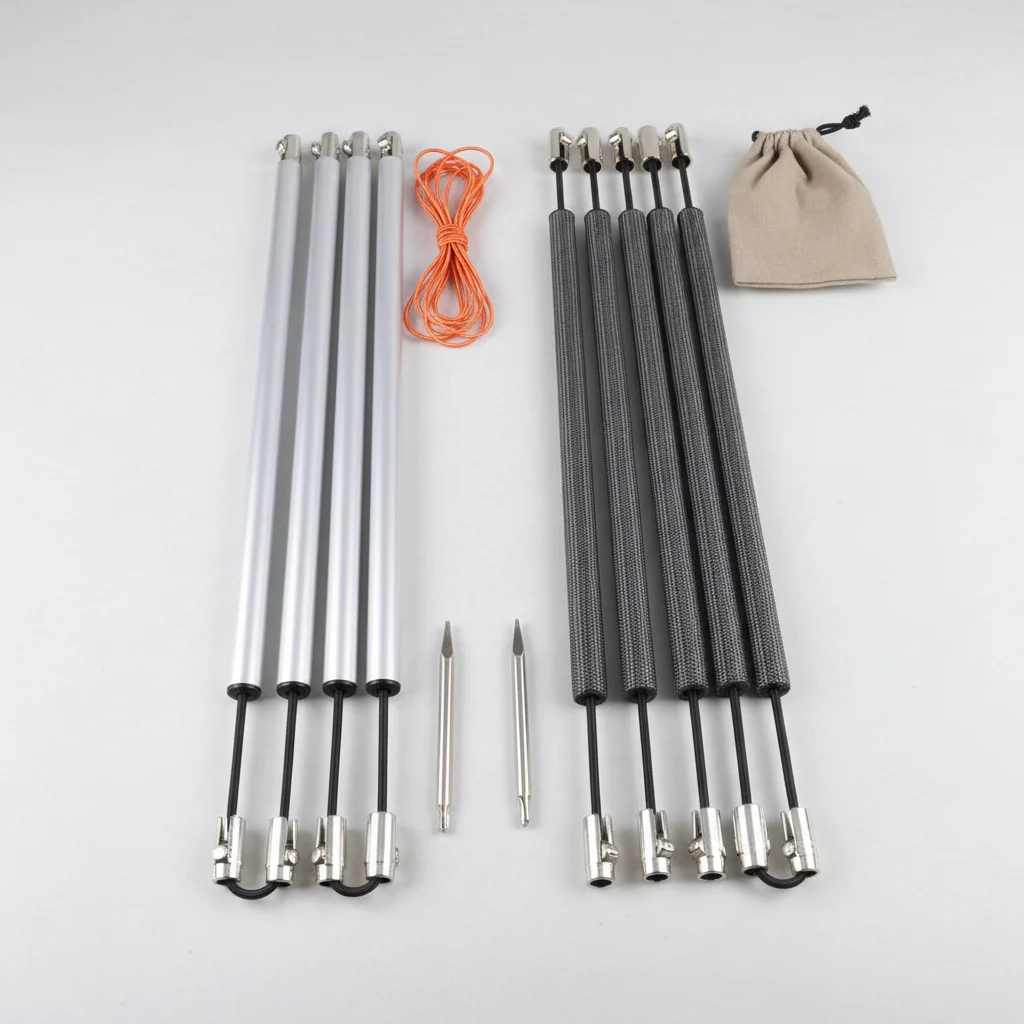
When considering camping tent poles, the choice between aluminum and fiberglass significantly impacts your tent’s durability and performance. Aluminum poles generally offer superior strength-to-weight ratio and longevity, making them a preferred choice for serious adventurers, while fiberglass poles are more budget-friendly but tend to be less durable over time.
Aluminum Tent Poles: The Lightweight Champion
Aluminum tent poles are renowned for their excellent strength and lightweight properties. They are typically made from anodized aluminum alloys, which provide resistance to corrosion and bending. This material is ideal for backpacking and mountaineering tents where every ounce counts and reliability in harsh conditions is paramount. The manufacturing process allows for precise engineering, resulting in poles that can withstand strong winds and heavy snow loads without permanent deformation.
While aluminum poles are more expensive upfront, their extended lifespan often makes them a more economical choice in the long run. They are also easier to repair in the field; a bent aluminum pole can often be straightened enough to continue use, whereas a fiberglass pole is more likely to splinter or snap completely.
Fiberglass Tent Poles: The Budget-Friendly Option
Fiberglass tent poles are a common sight in entry-level and family camping tents due to their lower cost. They are constructed from strands of glass fibers bound together with resin, offering a good balance of flexibility and strength for casual camping. However, fiberglass poles are heavier and more prone to splintering or snapping under stress, especially in colder temperatures or with repeated use.
When a fiberglass pole breaks, it often shatters, making field repairs more challenging and sometimes requiring a full section replacement. Despite this, for occasional campers or those on a tight budget, fiberglass poles provide adequate support for fair-weather conditions and less demanding environments.
Durability Comparison: Which Lasts Longer?
|
Our Picks for the Best Camping Tent in 2026
As an Amazon Associate I earn from qualifying purchases.
|
||
| Num | Product | Action |
|---|---|---|
| 1 | Tents for Camping 2/3/4 Person with Rainfly - Camping Tent Waterproof Windproof Easy Setup, Portable Double Layer Outdoor Dome Tent, Backpacking Tents for Adventure Backyard Hiking |

|
| 2 | Coleman Sundome Camping Tent with Rainfly, 2/3/4/6 Person Tent Sets Up in 10 Mins, Weatherproof Shelter for Camping, Festivals, Backyard, Sleepovers, & More |
|
| 3 | Golabs 3 Person Camping Tent w/ 9.5x8.5 ft Canopy, 3-Minute Setup by Pre-Attached Pole, PU1500mm Waterproof, 4 Side Mesh Tent Top & Door & Ventilation, Portable Family Tent w/Carry Bag & Pocket & Hook |
|
| 4 | 2-3 Person Camping Tent, Instant Pop Up Tents for Camping - 40s Automatic Easy Setup Tent with Rainfly, Double-Layer 3500mm Waterproof & Windproof Instant Tents for Hiking Backpacking |
|
| 5 | Amazon Basics Camping Tent, 3-Season Dome Design with Rainfly |
|
| 6 | Coleman Sundome Camping Tent with Rainfly, 2/3/4/6 Person Tent Sets Up in 10 Mins, Weatherproof Shelter for Camping, Festivals, Backyard, Sleepovers, & More |
|
| 7 | Coleman Sundome Camping Tent with Rainfly, 2/3/4/6 Person Tent Sets Up in 10 Mins, Weatherproof Shelter for Camping, Festivals, Backyard, Sleepovers, & More |
|
| 8 | CAMPROS CP Tent 8 Person Camping Tents, Weather Resistant Family Tent, 5 Large Mesh Windows, Double Layer, Divided Curtain for Separated Room, Portable with Carry Bag |
|
| 9 | Night Cat Pop-up Camping Tent: 2 Person Tent Waterproof Instant Easy Setup Family Tent |
|
| 10 | FanttikOutdoor Camping Tent 4/6/8/10 Person Instant Cabin Tent Setup in 60 Seconds with Rainfly & Windproof Portable with Carry Bag for Family Camping & Hiking |
|
In a direct comparison of durability, aluminum tent poles consistently outperform fiberglass. Aluminum’s inherent material properties allow it to flex and return to its original shape, resisting permanent damage from wind and stress. Fiberglass, while flexible, has a lower fatigue limit and is more susceptible to structural failure after repeated bending or impact. This difference is particularly noticeable in extreme weather conditions where the integrity of your shelter is critical.
- Aluminum poles resist bending and permanent deformation better.
- Fiberglass poles are prone to splintering and snapping.
- Aluminum maintains strength in a wider range of temperatures.
- Fiberglass can become brittle in cold weather.
- Aluminum offers a longer overall lifespan with proper care.
Repairability and Maintenance
Maintaining your tent poles, regardless of material, is crucial for longevity. For aluminum poles, inspect them regularly for bends or cracks, and clean them to prevent dirt buildup in the ferrules. Minor bends can often be carefully straightened. Fiberglass poles require more vigilance; look for fraying or splintering, which indicates impending failure. Carrying a pole repair sleeve is highly recommended for both types, but especially for fiberglass, as a complete break can render your tent unusable.
Making the Right Choice for Your Adventures
The best choice between aluminum and fiberglass tent poles ultimately depends on your camping style, budget, and the conditions you expect to encounter. For serious backpackers, mountaineers, or anyone prioritizing reliability and lightweight performance, aluminum is the clear winner. For casual car campers, families, or those on a budget, fiberglass poles can provide sufficient support for less demanding trips. Consider your investment in a tent as an investment in your outdoor comfort and safety.

My new mountaineering tent came with anodized aluminum alloys, and I’ve been really impressed. They’ve held up great against some pretty rough weather in the Rockies. I appreciate the corrosion resistance too, especially after a few rainy trips. It’s good to know they’re built to last.
I’ve always used fiberglass poles because they’re more budget-friendly, and they usually do the trick for car camping. However, I did have one snap on me during a particularly windy trip last fall. It’s a minor complaint, but it made me think about the durability difference. Maybe I’ll try aluminum next time for a more rugged option.
I recently upgraded my old tent to one with aluminum poles, and the difference is night and day. The strength-to-weight ratio is exactly what I needed for my backpacking trips. It’s so much easier to carry, and I feel way more confident in high winds now. Definitely worth the investment for serious adventurers.
I used to dread setting up my old tent because the poles were so flimsy. Switching to a tent with high-quality aluminum poles has been a game-changer. They’re incredibly sturdy and give me peace of mind, even when unexpected storms roll in. The precise engineering really makes a difference in how well they stand up to heavy snow loads.