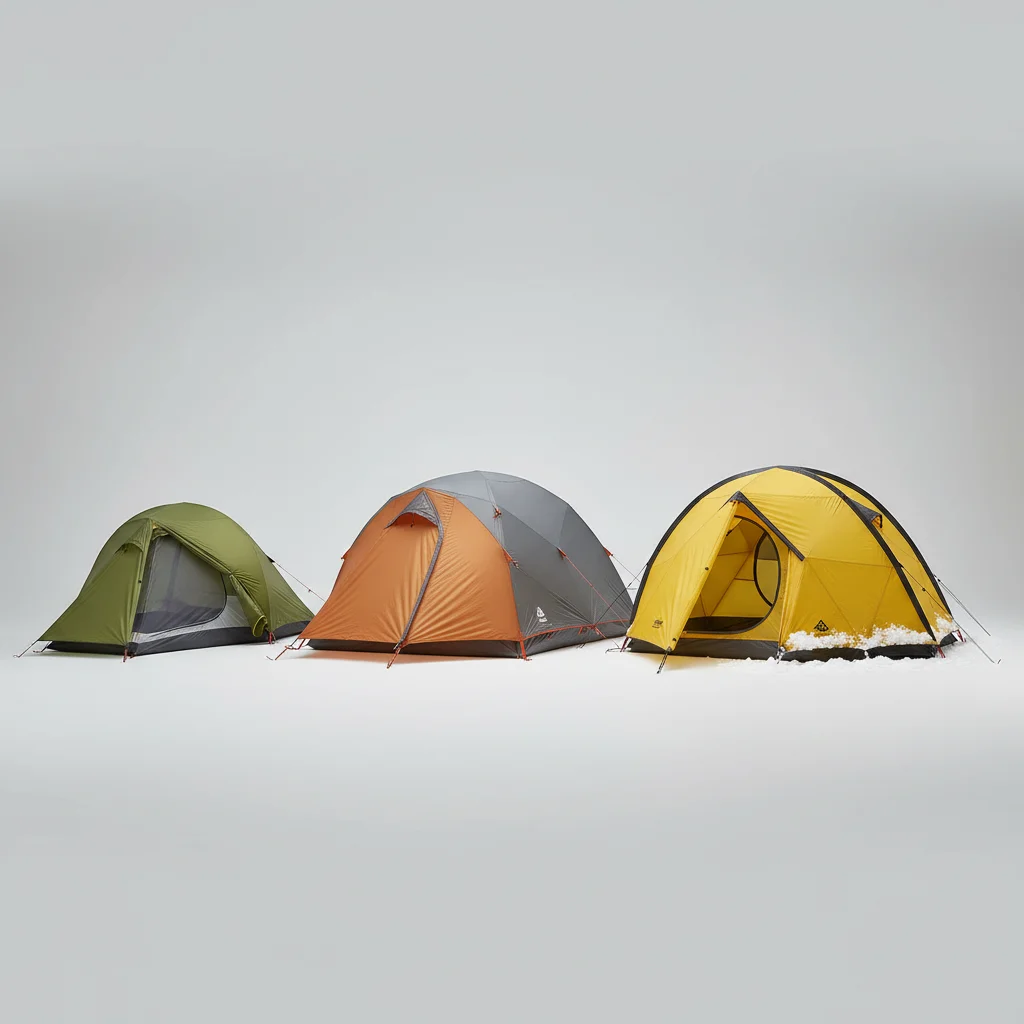
Choosing the right camping tent for each season is crucial for comfort and safety. Generally, there are three main types of tents designed for specific seasonal conditions: 3-season, 4-season, and extended 3-season tents. Understanding the distinctions between these will help you select the optimal shelter for your adventures, ensuring you’re prepared for anything from mild summer nights to harsh winter storms.
Understanding 3-Season Tents
Three-season tents are the most common and versatile option for campers. They are designed to handle the mild to moderate conditions of spring, summer, and fall. These tents typically feature ample mesh panels for ventilation, which helps to reduce condensation and keep the interior cool during warmer weather. Their construction prioritizes airflow and protection from rain and light wind, making them ideal for most recreational camping trips.
While they offer good protection against rain and bugs, 3-season tents are not built to withstand heavy snow loads or extreme winds. Their lighter pole structures and more breathable fabrics are not sufficient for the rigors of winter camping. They are perfect for car camping, backpacking in temperate climates, and casual outdoor excursions where extreme weather is not anticipated.
Exploring 4-Season Tents
Four-season tents, often referred to as mountaineering tents, are engineered for extreme conditions, including heavy snow, strong winds, and freezing temperatures. These tents feature robust pole structures, often with multiple crossing points, to create a strong, stable shelter capable of bearing significant snow loads. The fabric used in 4-season tents is typically thicker and more durable, with minimal mesh to maximize warmth retention.
While excellent for winter expeditions and high-altitude camping, 4-season tents can be overkill for milder weather. Their reduced ventilation can lead to excessive condensation in warmer temperatures, and their heavier weight makes them less suitable for casual backpacking. They are an essential piece of gear for serious winter adventurers and those venturing into alpine environments.
The Niche of Extended 3-Season Tents
|
Our Picks for the Best Camping Tent in 2026
As an Amazon Associate I earn from qualifying purchases.
|
||
| Num | Product | Action |
|---|---|---|
| 1 | 2-3 Person Camping Tent, Instant Pop Up Tents for Camping - 40s Automatic Easy Setup Tent with Rainfly, Double-Layer 3500mm Waterproof & Windproof Instant Tents for Hiking Backpacking |

|
| 2 | Coleman Sundome Camping Tent with Rainfly, 2/3/4/6 Person Tent Sets Up in 10 Mins, Weatherproof Shelter for Camping, Festivals, Backyard, Sleepovers, & More |
|
| 3 | Coleman Sundome Camping Tent with Rainfly, 2/3/4/6 Person Tent Sets Up in 10 Mins, Weatherproof Shelter for Camping, Festivals, Backyard, Sleepovers, & More |
|
| 4 | Tents for Camping 2/3/4 Person with Rainfly - Camping Tent Waterproof Windproof Easy Setup, Portable Double Layer Outdoor Dome Tent, Backpacking Tents for Adventure Backyard Hiking |
|
| 5 | Night Cat Pop-up Camping Tent: 2 Person Tent Waterproof Instant Easy Setup Family Tent |
|
| 6 | Golabs 3 Person Camping Tent w/ 9.5x8.5 ft Canopy, 3-Minute Setup by Pre-Attached Pole, PU1500mm Waterproof, 4 Side Mesh Tent Top & Door & Ventilation, Portable Family Tent w/Carry Bag & Pocket & Hook |
|
| 7 | CAMPROS CP Tent 8 Person Camping Tents, Weather Resistant Family Tent, 5 Large Mesh Windows, Double Layer, Divided Curtain for Separated Room, Portable with Carry Bag |
|
| 8 | Amazon Basics Camping Tent, 3-Season Dome Design with Rainfly |
|
| 9 | Coleman Sundome Camping Tent with Rainfly, 2/3/4/6 Person Tent Sets Up in 10 Mins, Weatherproof Shelter for Camping, Festivals, Backyard, Sleepovers, & More |
|
| 10 | FanttikOutdoor Camping Tent 4/6/8/10 Person Instant Cabin Tent Setup in 60 Seconds with Rainfly & Windproof Portable with Carry Bag for Family Camping & Hiking |
|
Extended 3-season tents bridge the gap between standard 3-season and full 4-season tents. They offer enhanced durability and weather protection compared to typical 3-season models, making them suitable for early spring and late fall camping when temperatures can drop and winds can pick up. These tents often incorporate stronger poles and slightly less mesh than a standard 3-season tent, providing a better balance of ventilation and warmth.
They are a great choice for campers who frequently encounter shoulder-season conditions but don’t require the full-blown protection of a 4-season tent. They can handle light snow and more significant wind than a standard 3-season tent, offering a versatile option for those who push the boundaries of the traditional camping season.
Key Features to Consider for Each Season
- Ventilation: Essential for warmer seasons to prevent condensation and ensure comfort. Look for ample mesh and multiple vents.
- Pole Structure: Stronger, more numerous poles are crucial for winter tents to withstand snow and wind.
- Fabric Denier: Higher denier fabrics offer greater durability and resistance to tears, important for all-season use.
- Rainfly Coverage: A full-coverage rainfly is vital for protection in wet and windy conditions across all seasons.
- Weight: Lighter tents are preferred for backpacking, while car campers can afford heavier, more feature-rich options.
Choosing Your Seasonal Tent Wisely
When making your selection, consider the typical conditions you’ll face. For most casual campers, a 3-season tent will suffice for spring, summer, and fall trips. If you plan on venturing into colder, windier conditions during the shoulder seasons, an extended 3-season tent offers a good compromise. For true winter camping or high-altitude expeditions, a dedicated 4-season tent is indispensable. Always match your tent’s capabilities to the expected weather to ensure a safe and enjoyable outdoor experience.

I used to dread camping in anything but perfect weather, but getting a proper 4-season tent has completely changed my outlook. We just got back from a trip where it snowed unexpectedly, and the tent was a fortress! It handled the heavy snow load and kept us warm and dry. Definitely worth the investment if you’re serious about winter adventures.
I picked up an extended 3-season tent hoping it would bridge the gap for some early winter trips, but it was a bit of a letdown. While it handled the wind better than my old summer tent, the insulation wasn’t quite enough for temperatures dipping below freezing. I still felt a noticeable chill. It’s good for late fall, but I’ll need a true 4-season for anything colder.
I’ve always just used my old hand-me-down tent for everything, but after reading about the different season types, I finally invested in a proper 3-season tent. The ventilation is a game-changer for summer camping! No more waking up in a stuffy, humid tent. It’s perfect for our family trips in the spring and fall too, keeping us dry during unexpected showers.
My partner and I do a lot of backpacking, and we needed something reliable for various conditions. We went with a lightweight 3-season tent, and it’s been fantastic. The balance of protection from rain and light wind, combined with the mesh for airflow, is exactly what we needed. It packs down small and has held up great on several trips already.