Embarking on camping adventures offers a unique connection with nature, but the success and comfort of these trips largely depend on one crucial piece of equipment: your camping tent. A new tent is an investment, a reliable shelter against the elements, and a comfortable home away from home. However, its longevity and performance are directly linked to how well you maintain it. Neglecting proper care can lead to premature wear, reduced waterproofing, and even structural damage, turning a serene outdoor experience into a challenging one. This comprehensive guide will walk you through the essential maintenance tips, from pre-trip preparations to long-term storage, ensuring your new camping tent remains a dependable companion for many seasons to come.
Understanding Your Camping Tent’s Vulnerabilities
A camping tent is a sophisticated piece of gear, typically comprising several key components: the fabric (often nylon or polyester with waterproof coatings), sturdy poles (fiberglass or aluminum), and various zippers, guy lines, and stakes. Each component is designed to withstand outdoor conditions, but they are all susceptible to degradation over time. Ultraviolet (UV) radiation from the sun can weaken fabric and coatings, leading to brittleness and fading. Moisture, if not properly managed, can foster mildew and mold growth, which not only smells unpleasant but also breaks down fabric fibers and waterproof layers. Abrasions from dirt, sand, sharp objects, and improper packing can cause tears and punctures, while neglected zippers can jam or break. Understanding these vulnerabilities is the first step in proactive maintenance, ensuring your tent performs optimally when you need it most.
Essential Pre-Trip and On-Site Maintenance for Your Tent
Proper care begins long before you hit the campsite, and continues throughout your adventure. Thoughtful attention during these stages can prevent minor issues from escalating into major problems.
Pre-Trip Inspection and Preparation
|
Our Picks for the Best Camping Tent in 2026
As an Amazon Associate I earn from qualifying purchases.
|
||
| Num | Product | Action |
|---|---|---|
| 1 | Coleman Sundome Camping Tent with Rainfly, 2/3/4/6 Person Tent Sets Up in 10 Mins, Weatherproof Shelter for Camping, Festivals, Backyard, Sleepovers, & More |

|
| 2 | Amazon Basics Camping Tent, 3-Season Dome Design with Rainfly |
|
| 3 | Tents for Camping 2/3/4 Person with Rainfly - Camping Tent Waterproof Windproof Easy Setup, Portable Double Layer Outdoor Dome Tent, Backpacking Tents for Adventure Backyard Hiking |
|
| 4 | Golabs 3 Person Camping Tent w/ 9.5x8.5 ft Canopy, 3-Minute Setup by Pre-Attached Pole, PU1500mm Waterproof, 4 Side Mesh Tent Top & Door & Ventilation, Portable Family Tent w/Carry Bag & Pocket & Hook |
|
| 5 | CAMPROS CP Tent 8 Person Camping Tents, Weather Resistant Family Tent, 5 Large Mesh Windows, Double Layer, Divided Curtain for Separated Room, Portable with Carry Bag |
|
| 6 | Coleman Sundome Camping Tent with Rainfly, 2/3/4/6 Person Tent Sets Up in 10 Mins, Weatherproof Shelter for Camping, Festivals, Backyard, Sleepovers, & More |
|
| 7 | Coleman Sundome Camping Tent with Rainfly, 2/3/4/6 Person Tent Sets Up in 10 Mins, Weatherproof Shelter for Camping, Festivals, Backyard, Sleepovers, & More |
|
| 8 | Night Cat Pop-up Camping Tent: 2 Person Tent Waterproof Instant Easy Setup Family Tent |
|
| 9 | 2-3 Person Camping Tent, Instant Pop Up Tents for Camping - 40s Automatic Easy Setup Tent with Rainfly, Double-Layer 3500mm Waterproof & Windproof Instant Tents for Hiking Backpacking |
|
| 10 | FanttikOutdoor Camping Tent 4/6/8/10 Person Instant Cabin Tent Setup in 60 Seconds with Rainfly & Windproof Portable with Carry Bag for Family Camping & Hiking |
|
Before every trip, conduct a thorough inspection of your tent. Pitch it in your backyard or a spacious area to check for any existing damage. Look for small tears, frayed seams, or pinholes in the fabric. Ensure all zippers run smoothly; if they’re stiff, clean them with a small brush and apply a specialized zipper lubricant or wax. Check the shock cords in your tent poles for elasticity and signs of wear. If your tent has seen many adventures or hasn’t been re-waterproofed recently, consider applying a fresh DWR (Durable Water Repellent) treatment to the rainfly and floor, and resealing any worn seams to maintain its waterproof integrity.
Proper Pitching Practices
The site where you pitch your tent significantly impacts its condition. Always choose a flat, well-drained area. Before laying out your tent, clear the ground of any sharp objects such as rocks, sticks, or pinecones that could puncture the tent floor.
Using a footprint or a ground tarp beneath your tent is highly recommended. This extra layer creates a barrier, protecting the tent floor from abrasion, moisture, and potential punctures, thereby extending its lifespan. Ensure the footprint is slightly smaller than the tent floor to prevent water from pooling between them during rain. Drive your stakes at a 45-degree angle for optimal stability, choosing appropriate stake types for the terrain (e.g., steel stakes for hard ground, wider stakes for sand).
During Use Care
While at the campsite, simple habits can go a long way in preserving your tent.
- Keep it clean: Try to remove shoes before entering to minimize bringing dirt and debris inside. Use a small whisk broom or brush to sweep out any accumulated sand or dirt from the tent floor daily.
- Ensure ventilation: Proper ventilation is crucial to reduce condensation, which can lead to dampness and mildew. Open vents and, if weather permits, tent doors or windows.
- Protect from sun and heat: Prolonged exposure to direct sunlight and its UV rays can degrade tent fabrics. Whenever possible, pitch your tent in the shade. If shade is unavailable, consider using a tarp over the tent to create an extra protective layer. Avoid exposing the tent to open flames or excessive heat sources like campfires or cooking stoves, as this can damage the fabric and coatings.
- Handle zippers gently: Zippers are often a point of failure. Avoid forcing them if they get stuck. Instead, gently work them to free any trapped fabric or debris. Keep them clean of sand, dirt, and saltwater residue, especially after beach camping.
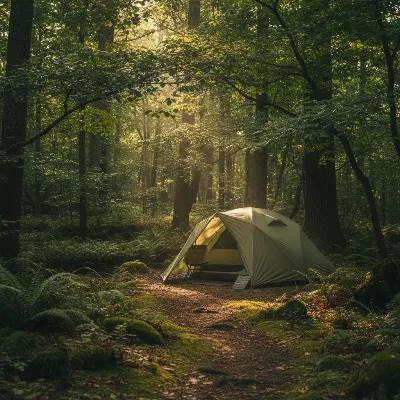 A vibrant green camping tent pitched snugly under the dappled shade of tall trees in a lush forest, with soft sunlight filtering through the canopy.
Deep Cleaning Your Camping Tent: A Step-by-Step Guide
While regular on-site care keeps your tent tidy, periodic deep cleaning is essential to remove stubborn dirt, odors, and environmental residues that can degrade materials and compromise waterproofing.
When to Deep Clean
You should deep clean your tent when it’s visibly dirty, smells musty, or if the waterproof coating (DWR) no longer causes water to bead up effectively. This is particularly important after camping in sandy, dusty, salty, or smoky environments, as these elements can be abrasive and corrosive to fabrics and components.
Gathering Supplies
For a proper deep clean, you’ll need:
- Cool to lukewarm water: Avoid hot water, which can damage coatings.
- Mild, non-detergent soap: Dish soap can be used sparingly for spot cleaning, but a cleaner specifically designed for outdoor gear and tents (e.g., Nikwax Tech Wash) is preferable for overall cleaning as household detergents can strip waterproofing.
- Non-abrasive sponge or soft brush: To gently scrub without damaging fabric.
- Large tub or bathtub: For soaking the tent.
Cleaning Process
- Brush and Shake: Start by brushing off any loose dirt, sand, or debris from both the interior and exterior of the tent while it’s set up or laid out. Shake it out thoroughly.
- Spot Clean: For extra-dirty areas or stubborn stains (like pine sap or bird droppings), gently spot clean with a cloth or sponge and a small amount of mild dish soap. For pine sap, mineral oil or alcohol-based products like hand sanitizer can be effective, followed by thorough rinsing.
- Prepare for Soaking: Unzip all doors and turn the tent inside out if recommended by the cleaner’s instructions.
- Soak the Tent: Fill a large tub with cool to lukewarm water and add your chosen tent cleaner according to its instructions. Submerge the tent body and rainfly completely. Gently agitate the water by hand and knead the tent to ensure water reaches all areas. Allow it to soak for the recommended duration (e.g., 20 minutes).
- Rinse Thoroughly: Drain the dirty water and refill the tub with clean water. Rinse the tent thoroughly, repeating this process several times until all soap residue is gone and the water runs clear.
- Clean Zippers and Poles: Use an old toothbrush to scrub out any grit from zipper teeth. Wipe down poles with a rag to remove dirt, dust, or salt residue.
Drying Thoroughly
This is arguably the most critical step. A tent put away even slightly damp will almost certainly develop mildew, which causes unpleasant odors and irreversible damage to waterproof coatings.
- Hang in a cool, shaded, well-ventilated area: Set your tent up, drape it over a clothesline, or hang it indoors until it is completely dry. This may take several days, especially for larger tents or in humid conditions.
- Avoid direct sunlight: While drying, avoid direct sunlight, as UV exposure can continue to degrade the fabric.
- Separate parts: If possible, dry the inner tent and outer tent (rainfly) separately to ensure proper airflow and complete dryness.
- No heat sources: Never use a tumble dryer, radiator, or any other heat source to speed up drying, as this can severely damage the tent’s waterproof coatings and fabric.
Restoring and Repairing Your Tent: Extending Its Lifespan
Even with the best maintenance, wear and tear are inevitable. Knowing how to perform basic repairs and restore your tent’s protective qualities can significantly extend its useful life and save you from costly replacements.
Seam Sealing and Re-Waterproofing
Over time, the factory-applied seam tape and DWR coatings can degrade.
- Seam Sealing: If you notice leaks along the seams, you’ll need to re-seal them. Clean the seams thoroughly, then apply a specialized seam sealant with a brush or applicator, following the product instructions. Allow it to dry completely.
- Re-Waterproofing: When water no longer beads up on your tent fabric, it’s time to reapply a DWR treatment. Clean the tent thoroughly first, then use a spray-on or wash-in waterproofing product designed for outdoor gear. These products help restore the fabric’s water repellency.
Common Repairs and Kits
Having a basic repair kit on hand is invaluable for quick fixes, especially while on a trip.
- Fabric Tears and Holes:
- Repair Tape: For small tears, a strong, adhesive repair tape (like Gear Aid Tenacious Tape) is a quick solution. Clean the area around the tear, cut the tape to size (slightly larger than the tear), and stick it firmly over the damage. Transparent tapes blend seamlessly.
- Adhesive Patches: These patches offer a more robust, sometimes permanent, repair. They come in various sizes and materials, compatible with nylon or polyester tents.
- Mesh Holes: Small holes in mesh screens can be fixed with specialized mesh patches. These are typically self-adhesive and weather-resistant, allowing you to quickly mend bug netting.
- Zipper Issues: If cleaning and lubricating don’t fix a sticky zipper, the slider might be damaged or misaligned. Repair kits sometimes include replacement sliders. For minor issues, careful manipulation with pliers can sometimes resolve alignment problems.
- Pole Breakages: Tent poles can snap at inconvenient times. A metal pole sleeve (often included in repair kits) can provide an effective temporary repair. Slide the sleeve over the broken section and secure it with duct tape. For frayed shock cord, replacement elastic is available.
DIY Repair Kit Essentials
Every camper should carry a compact tent repair kit. Here’s what it should include:
- Adhesive-backed nylon or polyester patches: For fabric tears.
- Mesh screen repair patches: For holes in bug netting.
- Seam sealant: To fix leaky seams.
- Tent repair tape (e.g., Tenacious Tape): A versatile item for quick fixes.
- Fabric glue: For a durable, weatherproof bond.
- Needle and strong nylon thread: For sewing rips or re-stitching seams.
- Metal pole sleeve: For temporary pole repairs.
- Duct tape: A multi-purpose emergency fix.
- Small scissors: For cutting patches and tape.
- Alcohol wipes: For cleaning surfaces before applying patches or sealants.
Optimal Storage Solutions for Long-Term Tent Care
How you store your tent during the off-season or between trips is as crucial as its active maintenance. Improper storage can lead to rapid deterioration.
Before Storage Checklist
Before packing your tent away for an extended period, ensure it is:
- Completely clean: Free from all dirt, sand, sap, and other residues.
- Bone dry: Absolutely no moisture remaining to prevent mold and mildew.
- Inspected and Repaired: All minor damages, such as tears, loose seams, or sticky zippers, should be addressed.
- Waterproofed: If necessary, reapply DWR and seam seal before storage.
Storage Environment
The ideal storage environment for your tent is a cool, dry, and well-ventilated space.
- Avoid Humidity and Extreme Temperatures: Basements, attics, and car trunks are often too damp, hot, or prone to temperature fluctuations, which can damage fabric coatings and encourage mildew. A gear closet or garage (if dry and temperature-stable) are better options.
- Protect from Pests: Store your tent in a location safe from rodents and insects, which can chew through fabric or nest inside. Elevating it off the ground can also help deter pests.
- Away from Sunlight: Even indirect sunlight can contribute to UV degradation over time.
Packing Method
Avoid compressing your tent tightly in its original stuff sack for long-term storage.
- Loose Packing: Instead, store it loosely folded or stuffed into a larger, breathable bag, such as an old pillowcase or a dedicated mesh storage bag. This allows the fabric and coatings to relax and breathe, preventing creases from becoming permanent weak spots and reducing stress on the material.
- Rotate Position: If storing it folded, try to refold it differently each time to avoid consistent stress on the same areas.
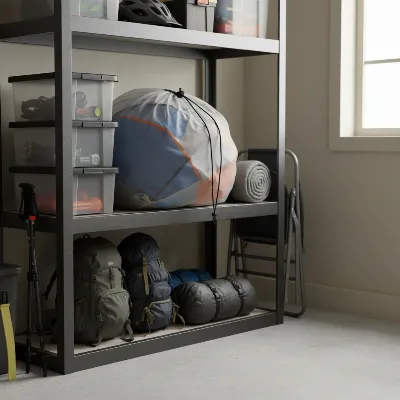 A camping tent loosely folded and placed in a large, breathable mesh bag on a shelf in a clean, organized garage storage area.
Poles and Accessories
Store tent poles, stakes, and guy lines separately or in their own breathable bags. For tent poles, consider storing them partially assembled if space allows. This reduces tension on the internal shock cord, extending its life. If full assembly isn’t feasible, collapse them by starting in the middle and working outwards to distribute tension evenly.
Expert Tips for Maximizing Your Tent’s Durability
Beyond the fundamental cleaning, repair, and storage practices, a few expert insights can further enhance your tent’s longevity.
“Think of your tent as your adventure home; just like any home, consistent care prevents major renovations. Small actions, like a quick brush-down after each trip, add up to years of reliable shelter.” – Chris Pottinger, Former Senior Tent Designer for REI Co-op.
- Never pack a wet or dirty tent: This is the golden rule of tent maintenance. Even a few hours of dampness can initiate mildew growth.
- Use specialized cleaners: Avoid harsh household detergents, bleaches, or fabric softeners, as these can strip waterproof coatings and damage fabrics. Opt for products specifically designed for outdoor gear.
- Carry a basic repair kit: Small issues can quickly become big problems in the wilderness. A compact repair kit is crucial for on-the-spot fixes.
- Regular inspections are key: Make it a habit to check your tent before and after every use, paying close attention to seams, zippers, and high-stress areas. Early detection of wear allows for prompt, easier repairs.
Conclusion
Your new camping tent is more than just fabric and poles; it’s your sanctuary in the wild, offering protection and comfort on countless adventures. By diligently following these essential maintenance tips—from meticulous cleaning and thorough drying to proper repairs and smart storage—you empower your tent to withstand the rigors of the outdoors for many years. Invest time in caring for your tent, and it will repay you with unwavering reliability, ensuring your future camping experiences are always safe, comfortable, and memorable. What steps will you take today to extend the life of your camping tent?
Frequently Asked Questions
How often should I re-waterproof my camping tent?
The frequency for re-waterproofing depends on usage and environmental exposure. Generally, if water no longer beads up on the fabric or if you notice wet spots during rain, it’s time to reapply a DWR treatment. For regular campers, this might be once a season or every few years, especially after deep cleaning.
Can I machine wash my camping tent?
No, you should never machine wash your Camping Tent. Washing machines, especially top-loaders with agitators, can stretch, tear, and permanently damage the delicate waterproof coatings and seams of tent fabrics. Always hand wash your tent using a large tub and mild, outdoor-specific cleaning agents.