A snapped or splintered tent pole can quickly turn an exciting outdoor adventure into a frustrating ordeal. Imagine arriving at your campsite after a long hike, only to find a crucial part of your shelter compromised. When your tent’s integrity is on the line, knowing how to fix a broken camping tent pole quickly and effectively is an invaluable skill that can salvage your trip and extend the life of your gear. This comprehensive guide will equip you with the knowledge to tackle both immediate field repairs and more permanent DIY solutions, ensuring your tent remains a reliable sanctuary in the wilderness.
Understanding Your Tent Poles: Types and Why They Break
Before diving into repairs, it’s helpful to understand the different types of tent poles and the common culprits behind their damage. Tent poles are the structural backbone of your shelter, and their material largely dictates their resilience and how they might fail.
Most modern tents feature poles made from either aluminum or fiberglass. Aluminum poles are generally found in higher-end tents, valued for their strength, lightweight nature, and durability. While robust, they can bend or snap under extreme pressure, such as powerful winds or improper setup. Fiberglass poles, on the other hand, are more common in budget-friendly tents. They offer decent strength but are notably more prone to splintering and cracking, often leaving sharp, uncomfortable shards. Less common are steel poles, typically used in larger, heavier-duty tents due to their immense strength, though they are also susceptible to rust if not maintained, and composite poles, a newer innovation blending the best characteristics of aluminum and fiberglass.
Pole damage often stems from several factors. Strong winds are a frequent cause, exerting immense force that can bend or snap poles, especially if the tent isn’t properly guyed out. Improper setup, such as forcing poles into place or not fully seating ferrules (the metal connectors between sections), can create weak points that lead to breakage. Over time, general wear and tear, UV exposure, and even manufacturing defects can compromise a pole’s integrity. Identifying whether your pole is cleanly snapped, split lengthwise, bent, or if the internal shock cord is compromised will guide your repair strategy.
Emergency Field Repairs: Getting Your Tent Back Up Fast
When a tent pole breaks in the backcountry, a quick and effective field repair is paramount to maintaining your shelter. The goal is to provide enough structural integrity to last the remainder of your trip.
The simplest and often most effective field repair involves a tent pole repair sleeve, also known as a splint or ferrule. Many quality tents come with one of these short, slightly wider tubes. To use it, simply line up the broken pole sections. If the pole is bent but not fully snapped, gently straighten the bend as much as possible. Slide the repair sleeve over the pole end until it’s centered directly over the break or kink. Once positioned, firmly wrap both ends of the sleeve and the adjacent pole sections with duct tape or another heavy-duty adhesive tape you have on hand to secure it tightly and prevent movement. This method creates a sturdy splint that can withstand considerable tension.
> “A small repair sleeve and a roll of duct tape are lightweight essentials that can save your trip when a tent pole gives out unexpectedly.” – Outdoor Gear Specialist, Trailblazer Magazine
If you don’t have a dedicated repair sleeve, improvisation is key. A tent stake makes an excellent improvised splint. Align the broken pole sections and position a tent stake alongside the break, ensuring it spans both sides of the damage. Wrap each end of the stake and pole multiple times with duct tape. Another common and highly effective DIY method is creating a sleeve from a disposable plastic water bottle. Cut a rectangular section from the bottle, ensuring it’s long enough to cover the break and wide enough to wrap around the pole. Line up the broken pole ends, tape one side of the plastic piece to the pole with the break in the middle, then wrap the plastic tightly around the pole and secure it with generous amounts of duct tape. Remember, thin plastic bottles work best for this. Other sturdy, tube-like objects or even strong twigs or pencils can also serve as makeshift splints if secured properly.
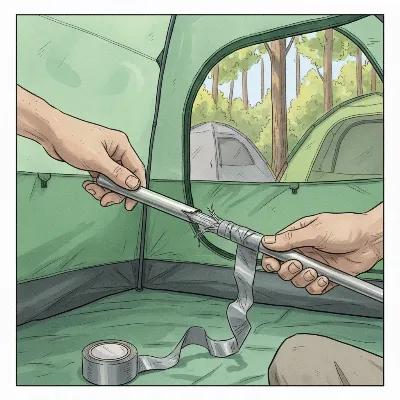 An illustration of a broken tent pole being repaired in the field with a repair sleeve and duct tape.
While duct tape is the camper’s best friend and incredibly versatile, it’s crucial to understand its limitations. For minor cracks, it can offer temporary stability, but for a complete snap, tape alone is rarely sufficient. It works best when used in conjunction with a splint, whether purpose-made or improvised, to provide the necessary structural rigidity. Be mindful not to apply so much tape that the pole can no longer slide through its tent sleeve. If you encounter a bent pole rather than a full break, try to gently straighten it back into shape by applying careful, even pressure. Once straightened, reinforcing the bent section with a repair sleeve and tape can prevent future issues.
DIY Permanent Tent Pole Repair: Long-Term Solutions
While field repairs are excellent for immediate fixes, a more permanent solution can be achieved at home, often extending the life of your tent poles for many more adventures. These repairs typically involve replacing damaged sections or re-stringing the internal shock cord.
For a more lasting fix to a snapped or severely compromised section, replacing the damaged pole section is the ideal approach. First, carefully identify the specific broken segment. You’ll likely need to disassemble the pole assembly, which often involves untying a knot at one end and pulling out the shock cord. Use a marker and tape to label each pole section in order as you remove it to ensure correct reassembly. Measure the length and diameter of the broken section precisely. Purchase a replacement pole section that matches these specifications and the original material (aluminum or fiberglass). Use a hacksaw to carefully cut the new section to the exact length of the damaged piece, then smooth any rough edges with a file. Re-thread the shock cord through all the pole sections, including the new one, ensuring they are in the correct sequence.
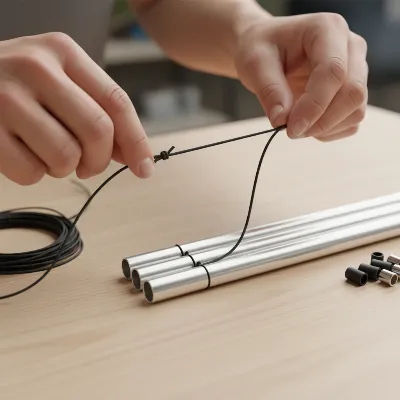 A close-up of hands replacing a tent pole's elastic shock cord during a DIY repair.
Replacing a broken or stretched shock cord is another common DIY repair. Over time, the elastic cord inside your tent poles can lose its elasticity or snap, making assembly difficult. To replace it, lay your tent pole out straight and mark each section with a number using tape to maintain the original order. Remove the end cap from one side of the pole. Untie the knot securing the old shock cord (or cut it if necessary) and pull out the old cord. Measure the length of the old cord or, for a new one, measure the total length of the pole segments laid out slack. Cut a new length of replacement shock cord, often slightly shorter than the total pole length to ensure proper tension. Tie a secure knot at one end of the new cord and insert it into one end cap. Then, carefully thread the new shock cord through each pole section, following your numbered labels. A piece of wire or a straightened paperclip can be helpful for guiding the cord through the hollow sections. Once threaded through all segments, stretch the cord to the appropriate tension – it should be taut enough to hold the poles together firmly but not so tight that they are difficult to disassemble. Secure the other end with a knot and replace the end cap.
Tools and Materials for Your Tent Pole Repair Kit
Being prepared with the right tools and materials is crucial for effective tent pole repair, whether in the field or at home.
For field repair, your kit should be lightweight and focused on quick fixes:
- Tent Pole Repair Sleeve (Splint): A must-have for emergency splinting. Carry one sized slightly larger than your pole’s diameter.
- Duct Tape (or Gaffer/Electrical Tape): Indispensable for securing splints and minor cracks. Consider wrapping some around a pen or lighter to save space.
- Multi-tool or Knife: Useful for cutting tape, plastic, or gently crimping splayed pole ends.
- Spare Tent Stake: Can double as an improvised splint.
For more permanent home repairs, you’ll need a more comprehensive set of items:
- Replacement Pole Sections: Keep a few spare sections that match your tent’s pole diameter and material.
- New Shock Cord: Essential for replacing broken or stretched elastic.
- Hacksaw or Pipe Cutter: For precisely cutting new pole sections to size.
- File or Sandpaper: To smooth cut edges, preventing damage to tent fabric or hands.
- Needle-Nose Pliers: Helpful for untying knots, removing end caps, or holding shock cord.
- Marker and Tape: For labeling pole sections during disassembly.
- Lighter: To carefully melt and seal the ends of new shock cord, preventing fraying.
- Small Clamp: Useful for holding shock cord under tension during re-stringing.
- Wire or Paperclip: Aids in threading shock cord through pole sections.
Preventative Measures: Keeping Your Tent Poles Intact
Prevention is always better than cure. By adopting good practices, you can significantly reduce the likelihood of your tent poles breaking in the first place.
Proper setup and guying are critical. Always follow your tent’s instructions for pitching, ensuring all poles are fully inserted into their ferrules and hubs. In windy conditions, utilize all available guy lines, staking them out properly to distribute stress across the tent’s structure and minimize movement that could strain poles.
Careful handling during packing and unpacking is also essential. Avoid forcing poles, especially when inserting them into sleeves or when disassembling. Don’t step on poles or allow heavy objects to fall on them. When packing, coil poles loosely or store them in their designated bag to prevent bending or pressure points.
Regular inspection of your poles should be part of your routine gear check. Look for signs of stress, small cracks, bends, or frayed shock cord. Addressing these minor issues before they escalate can prevent a complete break in the field. Finally, correct storage matters. Store your tent and poles in a cool, dry place away from direct sunlight and extreme temperatures, which can degrade materials over time.
Conclusion
A broken tent pole doesn’t have to signal the end of a camping trip. By understanding the types of poles, knowing how to execute quick field repairs with a sleeve or improvised splint, and being prepared for more permanent DIY fixes at home, you can confidently maintain your shelter’s integrity. Always pack a basic repair kit, including duct tape and a repair sleeve, to ensure you’re ready for any unexpected mishaps. Being proactive with proper tent setup and maintenance will not only prevent future breaks but also significantly extend the lifespan of your valuable outdoor gear.
What’s the most unusual item you’ve ever used to make an emergency tent pole repair in the wild?
Câu Hỏi Thường Gặp
Can I use super glue to fix a tent pole?
|
Our Picks for the Best Camping Tent in 2026
As an Amazon Associate I earn from qualifying purchases.
|
||
| Num | Product | Action |
|---|---|---|
| 1 | Night Cat Pop-up Camping Tent: 2 Person Tent Waterproof Instant Easy Setup Family Tent |

|
| 2 | Coleman Sundome Camping Tent with Rainfly, 2/3/4/6 Person Tent Sets Up in 10 Mins, Weatherproof Shelter for Camping, Festivals, Backyard, Sleepovers, & More |
|
| 3 | Golabs 3 Person Camping Tent w/ 9.5x8.5 ft Canopy, 3-Minute Setup by Pre-Attached Pole, PU1500mm Waterproof, 4 Side Mesh Tent Top & Door & Ventilation, Portable Family Tent w/Carry Bag & Pocket & Hook |
|
| 4 | Amazon Basics Camping Tent, 3-Season Dome Design with Rainfly |
|
| 5 | 2-3 Person Camping Tent, Instant Pop Up Tents for Camping - 40s Automatic Easy Setup Tent with Rainfly, Double-Layer 3500mm Waterproof & Windproof Instant Tents for Hiking Backpacking |
|
| 6 | Coleman Sundome Camping Tent with Rainfly, 2/3/4/6 Person Tent Sets Up in 10 Mins, Weatherproof Shelter for Camping, Festivals, Backyard, Sleepovers, & More |
|
| 7 | Tents for Camping 2/3/4 Person with Rainfly - Camping Tent Waterproof Windproof Easy Setup, Portable Double Layer Outdoor Dome Tent, Backpacking Tents for Adventure Backyard Hiking |
|
| 8 | FanttikOutdoor Camping Tent 4/6/8/10 Person Instant Cabin Tent Setup in 60 Seconds with Rainfly & Windproof Portable with Carry Bag for Family Camping & Hiking |
|
| 9 | Coleman Sundome Camping Tent with Rainfly, 2/3/4/6 Person Tent Sets Up in 10 Mins, Weatherproof Shelter for Camping, Festivals, Backyard, Sleepovers, & More |
|
| 10 | CAMPROS CP Tent 8 Person Camping Tents, Weather Resistant Family Tent, 5 Large Mesh Windows, Double Layer, Divided Curtain for Separated Room, Portable with Carry Bag |
|
While super glue might seem like a quick fix, it is generally not recommended for broken tent poles. Super glue creates a rigid bond that is often brittle and can crack under the dynamic stresses a tent pole endures, especially with flexing and wind. It’s better to use a repair sleeve or a strong tape for flexibility and durability.
How do I know what size repair sleeve to buy?
To determine the correct size for a repair sleeve, you need to measure the diameter of your tent poles. A repair sleeve should be just slightly larger in diameter than your pole, allowing it to slide over the broken section snugly without excessive wobble. Many manufacturers specify pole diameters in tent descriptions.
Are fiberglass tent poles repairable permanently?
Fiberglass tent poles can be repaired permanently by replacing the broken section, similar to aluminum poles. However, fiberglass tends to splinter, which can make field repairs more challenging and messy. For a lasting repair, cutting out the damaged section and replacing it with a new, matching segment is the most effective method.
How can I prevent my tent poles from breaking in strong winds?
To prevent tent poles from breaking in strong winds, always use all available guy lines and stake them out properly. This distributes the stress on the tent frame. Orient your tent with the narrowest side facing the wind, and ensure all pole sections are fully seated into their ferrules and hubs during setup to avoid creating weak points.
What if the break is right at a joint?
If a tent pole breaks directly at a joint (ferrule), you’ll need to splint the sections together. Slide a repair sleeve over the joint, ensuring it covers both the broken pole end and the adjacent section, then secure it firmly with duct tape. Be aware that this might prevent the pole from folding compactly when disassembled, requiring you to pack it as a single, longer piece.