Repairing a hole in your nylon camping tent is a straightforward DIY task that extends its lifespan and maintains your shelter’s integrity. Most tears can be effectively patched using an adhesive repair patch, rubbing alcohol for cleaning, and scissors to round patch corners. This process typically takes less than an hour, plus curing time, and ensures your tent remains a reliable haven for future outdoor escapades.
Understanding Your Nylon Tent and Common Damage
Nylon is a popular material for camping tents due to its lightweight nature, strength, and water resistance when properly coated. However, even the most durable nylon can fall victim to various hazards in the wilderness. Sharp branches, abrasive rocks, embers from a campfire, or even simply years of wear and tear can lead to unwelcome holes or tears. Recognizing the material you’re working with – typically ripstop nylon, often with a silicone or polyurethane coating – is the first step towards an effective repair. Understanding the nature of the damage, whether it’s a small puncture, a jagged rip, or a frayed mesh screen, will guide your choice of repair method and materials.
Essential Repair Kit for Nylon Tents
Having a well-stocked repair kit is crucial for both immediate field repairs and more thorough home fixes. While specific items can vary, certain essentials are universally recommended for patching nylon tents. For explore our camping tents reviews on this site.
Your DIY tent repair kit should ideally include:
- Repair Patches: High-quality adhesive patches, such as Gear Aid Tenacious Tape or similar ripstop nylon patches, are indispensable. For silnylon tents, ensure you use patches specifically designed for silicone-treated fabrics, like Tenacious Tape Silnylon Patches, as standard adhesives may not bond effectively.
- Rubbing Alcohol (Isopropyl Alcohol): This is vital for cleaning the area around the hole, removing dirt, dust, and oils that could prevent a patch from adhering properly. Alcohol swabs can also be used for convenience.
- Clean Rag or Microfiber Cloth: For applying rubbing alcohol and wiping down surfaces.
- Scissors: Sharp scissors are needed to cut patches to the correct size and shape, ensuring smooth, rounded edges.
- Seam Sealer (Optional but Recommended): A good quality seam sealer can be used to further waterproof the edges of a patch, especially on exposed areas or for pinhole repairs. Urethane-based sealers are suitable for coated fabrics, while silicone-based ones are necessary for silnylon.
- Spoon or Hard, Smooth Tool: To apply firm pressure and smooth out adhesive patches, ensuring a strong bond and preventing air bubbles.
- Mesh Patch (for mesh tears): Specific adhesive-backed mesh patches are designed for repairing netting without compromising airflow or insect protection.
Step-by-Step: How to Patch a Hole in Your Nylon Tent Fabric
Patching a hole in your nylon tent fabric is a straightforward process that can be completed at home or even in the field with minimal supplies. Follow these steps for a durable repair:
1. Prepare Your Workspace
|
Our Picks for the Best Camping Tent in 2026
As an Amazon Associate I earn from qualifying purchases.
|
||
| Num | Product | Action |
|---|---|---|
| 1 | Night Cat Pop-up Camping Tent: 2 Person Tent Waterproof Instant Easy Setup Family Tent |

|
| 2 | 2-3 Person Camping Tent, Instant Pop Up Tents for Camping - 40s Automatic Easy Setup Tent with Rainfly, Double-Layer 3500mm Waterproof & Windproof Instant Tents for Hiking Backpacking |
|
| 3 | Coleman Sundome Camping Tent with Rainfly, 2/3/4/6 Person Tent Sets Up in 10 Mins, Weatherproof Shelter for Camping, Festivals, Backyard, Sleepovers, & More |
|
| 4 | CAMPROS CP Tent 8 Person Camping Tents, Weather Resistant Family Tent, 5 Large Mesh Windows, Double Layer, Divided Curtain for Separated Room, Portable with Carry Bag |
|
| 5 | FanttikOutdoor Camping Tent 4/6/8/10 Person Instant Cabin Tent Setup in 60 Seconds with Rainfly & Windproof Portable with Carry Bag for Family Camping & Hiking |
|
| 6 | Golabs 3 Person Camping Tent w/ 9.5x8.5 ft Canopy, 3-Minute Setup by Pre-Attached Pole, PU1500mm Waterproof, 4 Side Mesh Tent Top & Door & Ventilation, Portable Family Tent w/Carry Bag & Pocket & Hook |
|
| 7 | Tents for Camping 2/3/4 Person with Rainfly - Camping Tent Waterproof Windproof Easy Setup, Portable Double Layer Outdoor Dome Tent, Backpacking Tents for Adventure Backyard Hiking |
|
| 8 | Coleman Sundome Camping Tent with Rainfly, 2/3/4/6 Person Tent Sets Up in 10 Mins, Weatherproof Shelter for Camping, Festivals, Backyard, Sleepovers, & More |
|
| 9 | Coleman Sundome Camping Tent with Rainfly, 2/3/4/6 Person Tent Sets Up in 10 Mins, Weatherproof Shelter for Camping, Festivals, Backyard, Sleepovers, & More |
|
| 10 | Amazon Basics Camping Tent, 3-Season Dome Design with Rainfly |
|
Set up your tent in a clean, dry, and well-lit area. If possible, pitch the tent or lay the damaged section flat on a hard, stable surface. This provides a taut and accessible area to work on the repair. For small tears, simply isolating the section might suffice.
2. Clean the Damaged Area
Using a clean rag dabbed with rubbing alcohol, thoroughly clean the area surrounding the hole. Extend your cleaning at least an inch beyond the edges of the tear on all sides. This step is critical as any dirt, dust, or residue will prevent the adhesive patch from forming a strong, lasting bond. Allow the cleaned area to dry completely before proceeding; this typically takes only a few minutes.
3. Cut and Round Your Patch
Measure the hole and cut an adhesive patch that is large enough to overlap the tear by at least one inch on all sides. For example, if your hole is one inch long, your patch should be at least three inches long. Crucially, round off the corners of your patch. Patches with sharp corners are more prone to snagging, peeling, and lifting over time, reducing the longevity of your repair. A circular or oval patch provides a much more secure and durable fix.
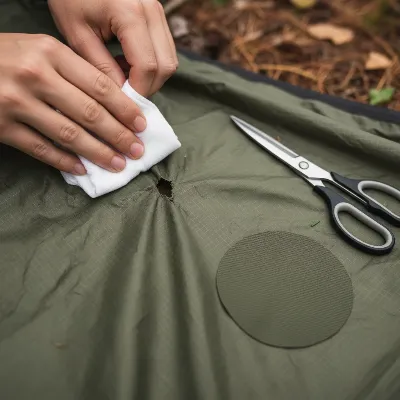 Preparing a nylon tent for patching with cleaning supplies and a rounded patch
4. Apply the Patch
Once the cleaned area is completely dry, carefully peel the backing off your chosen adhesive patch. Position the patch centrally over the hole, ensuring it covers the entire damaged area and the cleaned perimeter. Lay the patch down smoothly, trying to avoid any wrinkles or air bubbles. Once in place, use the back of a spoon or your fingers to firmly press down on the patch, working from the center outwards to the edges. Apply consistent pressure to ensure maximum adhesion to the nylon fabric.
5. Allow Adequate Curing Time
While many adhesive patches offer an instant fix, allowing them proper curing time is essential for a long-lasting repair. Most manufacturers recommend letting the patch cure for at least two to 24 hours before stressing the fabric or exposing it to the elements. During this time, avoid packing the tent away or subjecting the repaired area to tension or moisture.
Optional: Double-Sided Patching
For larger tears or areas under significant stress, such as near tent poles or zippers, consider applying a second patch to the inside of the tent, directly opposite the first one. This creates a reinforced, sandwich-like repair that significantly enhances durability and waterproofing. Follow the same cleaning, cutting, and application steps for the interior patch.
Dealing with Mesh Tears
Tears in your tent’s mesh windows or doors require a slightly different approach than fabric holes, as maintaining airflow and insect protection is key.
If you have a hole in a mesh door or window:
- Prepare: Lay the torn mesh section flat and clean the area around the tear with rubbing alcohol, allowing it to dry.
- Patch Selection: Use a specific mesh repair patch. These are often adhesive-backed and made of a fine netting material.
- Application: Center the mesh patch over the hole and press it firmly into place. If the patch has an adhesive ring around mesh fabric, ensure the adhesive makes good contact.
- Cure: Allow the patch to cure as recommended by the manufacturer. For small snags, sometimes carefully working the mesh strands back together can suffice, but any significant hole should be patched to prevent enlargement.
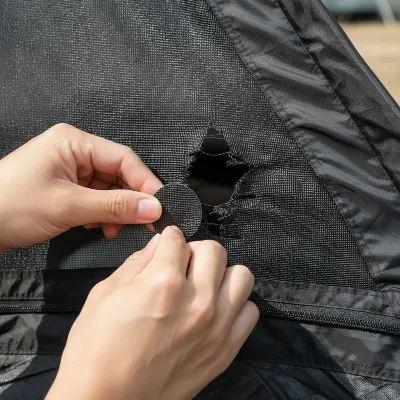 Repairing a torn mesh window on a camping tent with a specialized patch
Pro Tips for Durable Tent Repairs
To maximize the effectiveness and longevity of your tent repairs, keep these professional tips in mind:
- Always Round Corners: This is a simple yet crucial step that dramatically reduces the likelihood of your patch peeling over time.
- Cleanliness is Key: Never skip the cleaning step. Even seemingly invisible dirt or body oils can compromise adhesive bonds.
- Patience with Curing: Rushing the curing process can lead to a weakened repair. Always allow sufficient time for the adhesive to fully bond.
- Consider Sewing for High-Stress Areas: For major rips on high-tension areas or seams, a sewn patch (using a durable nylon thread and needle) reinforced with seam sealer or an adhesive patch can offer superior strength and longevity.
- Carry a Field Repair Kit: Small tears can quickly become larger problems. A compact repair kit with tenacious tape and alcohol wipes in your pack allows for immediate repairs, preventing further damage while you’re out camping.
- Match Fabric Type: For the best results, especially with more specialized tents like those made from silnylon, use repair patches designed for that specific fabric type. “Only silicone sticks to silicone,” so standard patches won’t work on silnylon.
“A small tear ignored can quickly become a large problem. Patching promptly and correctly is the difference between extending your tent’s life and needing a costly replacement.” – Outdoor Gear Specialist, Camping Tent Repair Services
Maintaining Your Tent to Prevent Future Damage
While knowing how to patch a hole is valuable, prevention is always the best strategy. Proper tent care significantly reduces the likelihood of damage:
- Choose Your Campsite Wisely: Clear the area of sharp rocks, sticks, and debris before setting up your tent.
- Pack Carefully: Ensure your tent is fully dry and clean before packing it away. Avoid sharp objects in the tent bag.
- Mind Campfires: Be cautious with sparks and embers around your tent.
- Store Properly: Store your tent in a cool, dry place away from direct sunlight when not in use.
Conclusion
A hole in your nylon camping tent doesn’t have to signal the end of its useful life or your outdoor adventures. With the right tools and a careful, step-by-step approach, you can effectively patch most tears and punctures yourself. By understanding your tent’s material, preparing your workspace, meticulously cleaning, and applying patches with care, you empower yourself to keep your shelter in top condition. Embracing DIY tent repair is not only cost-effective but also a sustainable practice, ensuring your trusty tent is ready to protect you on countless journeys to come.
What’s the most unusual item you’ve ever used for an emergency tent repair in the wilderness?
Frequently Asked Questions
Can I use duct tape to patch a nylon tent?
While duct tape can offer a temporary, emergency fix for a hole in a nylon tent, it is not recommended for a permanent solution. Duct tape’s adhesive often leaves a sticky residue, can degrade quickly when exposed to elements, and may not provide a waterproof seal, potentially causing more issues in the long run. Specialty tent repair tapes like Tenacious Tape are far more effective and durable.
How long does a tent patch last?
The longevity of a tent patch depends on several factors, including the quality of the patch material, the thoroughness of the application (especially cleaning and curing), and the environmental conditions it endures. A properly applied, high-quality adhesive patch on nylon can last for several years, often for the remaining lifespan of the tent, enduring multiple camping trips and washes.
Should I patch a tent from the inside or outside?
For best results, especially for larger tears or areas under stress, it is often recommended to apply patches to both the inside and outside of the tent fabric. If only one side is possible, patching from the outside is generally preferred for immediate waterproofing, but an internal patch can provide reinforcement. Always ensure the fabric is clean and dry on both sides where adhesive will be applied.
Frequently Asked Questions
Can duct tape be used for a permanent nylon tent repair?
No, duct tape is not recommended for a permanent fix on a nylon tent. Its adhesive can leave residue, degrade quickly, and may not provide a waterproof seal. Specialty repair tapes like Tenacious Tape offer a much more effective and durable solution for tent repairs.
How long can a properly applied tent patch be expected to last?
A properly applied, high-quality adhesive patch on nylon can last for several years, often for the remaining lifespan of the tent. Its longevity depends on the patch material, thorough application (cleaning and curing), and environmental conditions it endures during camping trips.
Is it better to patch a tent from the inside or the outside?
For optimal results, especially with larger tears or high-stress areas, apply patches to both the inside and outside of the tent fabric. If only one patch is feasible, patching from the outside is generally preferred for immediate waterproofing, while an internal patch provides reinforcement. Ensure both surfaces are clean and dry.
What are the essential items for a nylon tent repair kit?
An essential nylon tent repair kit should include high-quality adhesive repair patches (like Gear Aid Tenacious Tape), rubbing alcohol for cleaning, sharp scissors to round patch corners, and a clean rag. Optional but recommended items include seam sealer and a hard, smooth tool for applying pressure.
Why is it important to round the corners of a tent patch?
Rounding the corners of a tent patch is crucial because patches with sharp corners are more prone to snagging, peeling, and lifting over time. A circular or oval patch provides a much more secure and durable fix, significantly extending the longevity of your repair.
How to Patch a Hole in Your Nylon Tent Fabric
Patching a hole in your nylon tent fabric is a straightforward process that can be completed at home or even in the field with minimal supplies. Follow these steps for a durable repair.
Set up your tent in a clean, dry, and well-lit area. Pitch the tent or lay the damaged section flat on a hard, stable surface to provide a taut and accessible area for the repair. For small tears, simply isolating the section might suffice.
Thoroughly clean the area surrounding the hole with rubbing alcohol, extending at least one inch beyond the tear's edges. This step is critical to remove dirt, dust, and residue that could prevent the adhesive patch from bonding. Allow the cleaned area to dry completely, which usually takes only a few minutes.
Measure the hole and cut an adhesive patch large enough to overlap the tear by at least one inch on all sides. Crucially, round off the corners of your patch. Rounded corners prevent snagging and peeling, ensuring a more secure and durable fix.
Once the cleaned area is dry, peel the backing off the patch and position it centrally over the hole, covering the damaged area and cleaned perimeter. Lay it smoothly, avoiding wrinkles or air bubbles. Use a spoon or your fingers to firmly press down on the patch from the center outwards, ensuring maximum adhesion.
For a long-lasting repair, allow the patch proper curing time. Most manufacturers recommend at least two to 24 hours before stressing the fabric or exposing it to elements. Avoid packing the tent or subjecting the repaired area to tension or moisture during this period.

I tried patching a larger tear in my tent’s fly, which is made of a coated nylon, and while the patch held, it’s not as seamless as I hoped. The instructions were clear for the most part, but for bigger damage, it felt like it needed a bit more reinforcement than just the adhesive patch. It’ll do for now, but I might look into a more heavy-duty solution for bigger rips next time.
I had a small tear in my backpacking tent from a rogue branch and was dreading having to buy a new one. Following these steps, especially using the rubbing alcohol to clean the area, made the adhesive patch stick perfectly. It was super easy and took less than an hour, just like it said. My tent is good as new and ready for my next trip!
This saved my favorite lightweight nylon tent! I had a small puncture from an abrasive rock during a recent hike and thought it was a goner. The step-by-step instructions were so easy to follow, and the patch blended in surprisingly well. It’s great to know I can extend the life of my gear instead of constantly replacing it.
This guide was really helpful for patching up a small burn hole from a campfire ember on my ripstop nylon tent. The tip about rounding the patch corners is genius – I never would have thought of that, and it definitely seems to prevent peeling. I wish there was a bit more detail on how long to let the patch cure for different temperatures, but overall, a solid repair.