Storing a wet camping tent properly is crucial to prevent mold, mildew, and fabric degradation. The immediate danger of storing a damp tent is the rapid growth of mold and mildew within 24-48 hours, which causes foul odors, weakens fabric fibers, and compromises waterproof coatings through a process called hydrolysis. To ensure longevity, always thoroughly dry, clean, and store your tent in a cool, dry, and well-ventilated environment, loosely packed in a breathable container.
The Immediate Danger: Why a Wet Camping Tent is Your Worst Enemy
Imagine unfolding your camping tent for your next adventure, only to be greeted by a pungent, musty odor and unsightly splotches. This is the grim reality of storing a wet camping tent. The dark, moist environment within a packed tent creates a perfect breeding ground for mold and mildew, which can begin to develop in as little as 24-48 hours. These fungi not only produce a foul smell but also actively degrade the tent fabric, weakening its fibers and compromising the waterproof coatings. Over time, this process, known as hydrolysis, can turn the tent’s polyurethane coating flaky, tacky, and ultimately render it useless. Beyond the functional damage, mold and mildew can pose health risks, making your tent an unhealthy shelter. Therefore, the moment you return from a wet trip, immediate action is paramount.
Your Home as a Drying Station: Effective Indoor Strategies for Your Damp Camping Tent
When the weather doesn’t cooperate for outdoor drying, your home becomes the crucial space for rehabilitating your wet camping tent. The goal is to maximize air circulation and minimize humidity to ensure every inch of fabric is thoroughly dry.
Setting Up for Success: Space and Airflow
Upon arriving home, your first task is to unpack the wet tent immediately. Never leave it crammed in its stuff sack, as this accelerates mold growth. Look for a spacious, indoor area where you can spread out or hang the tent. Ideal locations include:
- Garage or Basement: If climate-controlled and well-ventilated, these can be excellent. Pitch the tent if space allows, or drape it over sturdy saw horses or lines.
- Spare Room: A guest room can serve as a temporary drying area. Spread the tent out on a clean drop cloth or hang the flysheet and inner tent over chairs, clotheslines, or even a stair banister.
- Bathroom: For smaller tents or individual components, hanging them over a shower rod or bathtub can be effective.
To significantly speed up the drying process, introduce ample airflow. Open windows and doors to create a cross-breeze. Position fans on a cold setting to circulate air directly onto and around the tent fabric. A dehumidifier can also be incredibly beneficial, especially in humid climates, by actively removing moisture from the air. Remember to rotate the tent periodically, ensuring no folds or hidden pockets of dampness remain.
The “Do Not” List: Avoiding Common Drying Mistakes
|
Our Picks for the Best Camping Tent in 2026
As an Amazon Associate I earn from qualifying purchases.
|
||
| Num | Product | Action |
|---|---|---|
| 1 | FanttikOutdoor Camping Tent 4/6/8/10 Person Instant Cabin Tent Setup in 60 Seconds with Rainfly & Windproof Portable with Carry Bag for Family Camping & Hiking |

|
| 2 | Coleman Sundome Camping Tent with Rainfly, 2/3/4/6 Person Tent Sets Up in 10 Mins, Weatherproof Shelter for Camping, Festivals, Backyard, Sleepovers, & More |
|
| 3 | Coleman Sundome Camping Tent with Rainfly, 2/3/4/6 Person Tent Sets Up in 10 Mins, Weatherproof Shelter for Camping, Festivals, Backyard, Sleepovers, & More |
|
| 4 | 2-3 Person Camping Tent, Instant Pop Up Tents for Camping - 40s Automatic Easy Setup Tent with Rainfly, Double-Layer 3500mm Waterproof & Windproof Instant Tents for Hiking Backpacking |
|
| 5 | Tents for Camping 2/3/4 Person with Rainfly - Camping Tent Waterproof Windproof Easy Setup, Portable Double Layer Outdoor Dome Tent, Backpacking Tents for Adventure Backyard Hiking |
|
| 6 | Amazon Basics Camping Tent, 3-Season Dome Design with Rainfly |
|
| 7 | Night Cat Pop-up Camping Tent: 2 Person Tent Waterproof Instant Easy Setup Family Tent |
|
| 8 | Golabs 3 Person Camping Tent w/ 9.5x8.5 ft Canopy, 3-Minute Setup by Pre-Attached Pole, PU1500mm Waterproof, 4 Side Mesh Tent Top & Door & Ventilation, Portable Family Tent w/Carry Bag & Pocket & Hook |
|
| 9 | CAMPROS CP Tent 8 Person Camping Tents, Weather Resistant Family Tent, 5 Large Mesh Windows, Double Layer, Divided Curtain for Separated Room, Portable with Carry Bag |
|
| 10 | Coleman Sundome Camping Tent with Rainfly, 2/3/4/6 Person Tent Sets Up in 10 Mins, Weatherproof Shelter for Camping, Festivals, Backyard, Sleepovers, & More |
|
While speed is important, it should never come at the expense of your tent’s integrity. Avoid these common pitfalls:
- No Direct Heat: Never use direct heat sources like hair dryers (on hot settings), tumble dryers, radiators, or open fires to dry your tent. High heat can damage the fabric’s waterproof coatings and compromise its structural integrity. If you must use a hair dryer, ensure it’s on a cold or gentle air mode and kept at a safe distance.
- No Direct Sunlight for Prolonged Periods: While a bit of sunlight can help, prolonged exposure to direct UV rays can degrade tent fabrics and coatings over time, making them brittle and reducing their lifespan. Opt for shaded outdoor areas or indoors.
- Impatience: Rushing the drying process is the leading cause of long-term tent damage. It’s crucial that your tent is unquestionably 100% dry before moving to storage. This might take a few days, so be patient and diligent.
Beyond the Surface: Thorough Cleaning Before Camping Tent Storage
Even if your camping trip seemed clean, a thorough inspection and cleaning are vital before long-term storage. Dirt, dust, sap, and bird droppings can attract pests or degrade fabric over time.
Begin by gently shaking out any loose debris. For spot cleaning, use a soft sponge or cloth with cold water and a mild, non-detergent soap. Focus on dirty areas, then rinse thoroughly to ensure no soap residue remains, as this can attract mildew. An old toothbrush is excellent for cleaning zippers, removing grit that can cause them to snag or break. Don’t forget to clean the tent poles and stakes as well; simply wipe them down with a damp cloth.
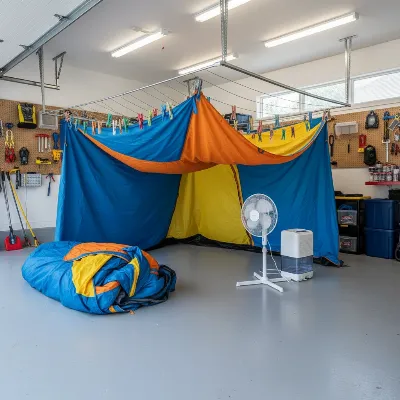 A large camping tent hanging to dry indoors in a spacious garage with a fan circulating air.
The Art of Preservation: Selecting the Right Storage for Your Camping Tent
Once your camping tent is impeccably clean and completely dry, the next step is choosing the optimal storage method and environment to protect your investment.
Breathability vs. Compression: Your Storage Container Choices
The small stuff sack that came with your tent is convenient for transport but generally unsuitable for long-term storage. Tightly compressing tent fabrics for extended periods can stress the material, leading to permanent creases and potentially damaging waterproof coatings.
For long-term storage, prioritize breathability and loose packing:
- Mesh Storage Bags: These are highly recommended as they allow air to circulate, preventing moisture buildup.
- Old Pillowcases: A simple, cost-effective, and breathable option.
- Plastic Bins: If using a plastic bin, ensure it’s not airtight unless you plan to add desiccants (like silica gel packs) to control humidity. Even then, a slightly vented bin is preferable.
When packing, consider stuffing your tent loosely into a larger bag rather than meticulously folding it. Stuffing prevents creasing along the same lines repeatedly, which can weaken the fabric over time. If you prefer folding, do so loosely, following original seams, and roll gently to squeeze out air.
The Ideal Environment: Cool, Dry, and Elevated
The location where you store your camping tent is as crucial as its preparation. The perfect storage environment is:
- Cool and Dry: Stable temperatures and low humidity are essential to prevent mold and mildew.
- Dark: Protects fabrics from UV degradation, even indirect light.
- Well-Ventilated: Allows for some air circulation.
“The secret to a long-lasting camping tent isn’t just about how you use it, but how diligently you care for it after the adventure ends. Prioritize a completely dry, loosely packed, and climate-controlled storage environment.” – Alex Chen, Outdoor Gear Specialist at TrailBlaze Adventures
Avoid storing your tent in damp basements, hot attics, or a car trunk. These locations often experience extreme temperature fluctuations and high humidity, which are detrimental to tent materials. Always store your tent off the floor, ideally on shelves, racks, or pallets. This prevents moisture absorption from concrete or unfinished surfaces and deters rodents and pests from making a home in your gear.
For tent poles, reducing tension on the shock cord can extend its life. You can store poles partially assembled or break them down by starting in the middle and working outwards, which evenly distributes tension. Metal poles can be greased with Vaseline to protect against rust.
Common Missteps: What to Absolutely Avoid When Storing Your Camping Tent
To reiterate and emphasize the most critical points, here are the absolute “don’ts” of camping tent storage:
- Storing It Wet (Even Slightly): This is the cardinal sin of tent care. It guarantees mold, mildew, and irreversible damage to your tent’s fabric and coatings.
- Packing It Tightly in Its Stuff Sack for Extended Periods: Compression can stress fabrics, create permanent creases, and potentially damage waterproof layers, leading to premature wear.
- Storing in Extreme Temperatures or High Humidity: Attics, basements, and car trunks are notorious for these conditions, which accelerate material degradation and foster fungal growth.
- Ignoring Minor Dirt or Damage: Small spots of dirt can become permanent stains, and minor tears can worsen in storage. Clean and repair before stowing.
- Storing with Food Scraps or Strongly Scented Items: These can attract rodents and insects, which can chew through fabric.
Maximizing Longevity: Expert Tips for Your Camping Tent’s Future
Beyond the immediate drying and storage, a few extra steps can significantly extend the life of your camping tent. Periodically, perhaps every few months, take your tent out of storage for a quick inspection. Look for any signs of moisture, pest activity, or unexpected damage. This allows for early intervention, preventing minor issues from becoming costly repairs. If you notice the waterproofing is diminishing, consider re-proofing treatments. Similarly, apply UV protection sprays if your tent frequently sees intense sun. These proactive measures ensure your camping tent remains a reliable and comfortable sanctuary for years of outdoor enjoyment.
Conclusion
Properly caring for your camping tent, especially after a wet adventure, is a commitment that directly translates into years of reliable service and countless memories. The few hours invested in thoroughly drying, meticulously cleaning, and thoughtfully storing your camping tent will prevent the frustrations of mold, mildew, and deteriorated fabrics. By prioritizing a cool, dry, and well-ventilated storage environment and avoiding tight compression, you safeguard your investment. Embrace these best practices, and your camping tent will always be ready to shelter you comfortably, awaiting your next call to the wild. What incredible adventures will your well-preserved camping tent witness next?
Frequently Asked Questions
Can I really store my camping tent in my house?
Yes, absolutely! Storing your camping tent in your house, typically in a gear closet, spare room, or even under a bed, is often the best option. The key is to ensure it is completely dry, loosely packed in a breathable bag, and kept in a cool, dry, and dark environment, away from direct heat or extreme humidity.
How long does it take for a wet camping tent to dry completely?
The drying time for a wet camping tent can vary significantly based on the tent’s material, the level of dampness, and the drying environment. Indoors, with good airflow from fans and potentially a dehumidifier, it can take anywhere from 24 hours to several days. It’s crucial to be patient and ensure every seam and fold is bone dry before storage.
Frequently Asked Questions
What are the immediate dangers of storing a wet camping tent?
Storing a wet camping tent creates a perfect breeding ground for mold and mildew, which can develop in as little as 24-48 hours. These fungi produce foul odors, weaken tent fabric, and compromise waterproof coatings through hydrolysis, ultimately rendering the tent useless.
What are the best indoor strategies for drying a damp camping tent?
For indoor drying, unpack the tent immediately and spread it out in a spacious, well-ventilated area like a garage, spare room, or bathroom. Maximize airflow with open windows, fans on a cold setting, and a dehumidifier to ensure every inch of fabric is thoroughly dry.
What common mistakes should be avoided when drying a tent?
Avoid using direct heat sources like hair dryers (on hot settings) or tumble dryers, as high heat damages waterproof coatings. Also, limit prolonged exposure to direct sunlight, which degrades fabrics, and never rush the drying process; ensure the tent is 100% dry.
What is the ideal environment for long-term camping tent storage?
The ideal environment for long-term camping tent storage is cool, dry, dark, and well-ventilated. Stable temperatures and low humidity prevent mold and mildew, while darkness protects fabrics from UV degradation. Store the tent off the floor on shelves or racks.
Can I really store my camping tent in my house?
Yes, absolutely! Storing your camping tent in your house, typically in a gear closet, spare room, or even under a bed, is often the best option. The key is to ensure it is completely dry, loosely packed in a breathable bag, and kept in a cool, dry, and dark environment, away from direct heat or extreme humidity.
How long does it take for a wet camping tent to dry completely?
The drying time for a wet camping tent can vary significantly based on the tent's material, the level of dampness, and the drying environment. Indoors, with good airflow from fans and potentially a dehumidifier, it can take anywhere from 24 hours to several days. It's crucial to be patient and ensure every seam and fold is bone dry before storage.
How to Dry and Store Your Camping Tent
Properly drying, cleaning, and storing your camping tent after a wet trip is essential to prevent mold, mildew, and fabric damage, ensuring its longevity for future adventures.
Immediately unpack your wet tent upon returning home to prevent mold growth. Find a spacious indoor area like a garage, spare room, or basement. Spread out or hang the tent to maximize air circulation.
Open windows and doors to create a cross-breeze. Use fans on a cold setting to circulate air directly onto the tent fabric, and consider a dehumidifier in humid climates. Rotate the tent periodically to ensure all areas dry evenly.
Once dry, gently shake out loose debris. Spot clean dirty areas with a soft sponge, cold water, and mild, non-detergent soap, then rinse thoroughly. Clean zippers with an old toothbrush and wipe down poles and stakes with a damp cloth.
Avoid the small stuff sack for long-term storage. Opt for breathable options like mesh storage bags or old pillowcases. If using plastic bins, ensure they are not airtight or include desiccants to control humidity.
Store your impeccably clean and dry tent in a cool, dry, dark, and well-ventilated location. Avoid damp basements, hot attics, or car trunks. Always store the tent off the floor on shelves or racks to prevent moisture absorption and deter pests.

This guide was a lifesaver! I used to just stuff my tent in its bag after a trip, but now I understand why it always smelled a bit off. The tip about loosely packing it in a breathable container makes so much sense. My tent feels much fresher now, and I’m confident it’ll last a lot longer without that nasty mildew.
Good advice overall, but I wish there were more specific recommendations for drying tents in small apartments. It’s tough to find a ‘well-ventilated environment’ when you don’t have a yard or a big garage. The 24-48 hour mold growth window is definitely a motivator though, so I’m trying to make it work.
I always knew storing a wet tent was bad, but I didn’t realize mold and mildew could start growing so quickly. The emphasis on thorough drying and cleaning before storage has completely changed my routine. No more musty surprises when I’m setting up camp! My tent is definitely going to have a longer life thanks to these tips.
Really helpful info here, especially the part about hydrolysis and how it breaks down waterproof coatings. I’ve had tents delaminate on me before and never really knew why. Now I’m much more diligent about making sure everything is bone dry before it goes into storage. It’s a bit more work, but worth it to protect my gear.