A leaky camping tent can quickly turn a dream outdoor adventure into a miserable experience. Waterproofing your camping tent involves identifying leaks, preparing the tent, and applying specific DIY methods to seams, fabric, and floors. This process protects your equipment and ensures a safe, enjoyable trip, as even high-quality tents lose water-repellent properties over time due to UV exposure, abrasion, and wear.
Understanding Tent Waterproofing and Why It Fails
Tent waterproofing relies on a combination of materials and treatments designed to keep moisture out. Most modern synthetic tents feature a polyurethane (PU) or silicone coating on the inside of the fabric, which acts as the primary waterproof barrier. On the exterior, a Durable Water Repellent (DWR) finish causes water to bead up and roll off the surface, preventing the fabric from becoming saturated and maintaining breathability.
However, these protective layers are not permanent. UV radiation from the sun, abrasive contact with branches or ground, accumulation of dirt and debris, and improper storage can all degrade the coatings and DWR finish. This degradation compromises the tent’s ability to repel water, leading to leaks. Storing a tent compressed or damp can also accelerate wear and promote mold and mildew growth, further damaging the fabric’s integrity. For expert camping tents reviews on this site.
Signs Your Tent Needs Re-Waterproofing
Identifying when your camping tent needs a waterproofing refresh is crucial. The most obvious sign is visible leaking during rainfall or a water test, where water seeps through the fabric or drips from seams. Another common indicator is when water no longer beads up and rolls off the tent fabric; instead, it soaks in, making the fabric appear dark and wet. You might also notice the waterproof coating on the underside of the tent fly flaking, peeling away, or becoming loose, which signifies the coating is breaking down. Regularly inspecting your tent for thinning material, tears, frayed seams, or discoloration is also a good practice, as these can be weak points for water entry.
Essential Preparation Steps Before Waterproofing
Proper preparation is the cornerstone of successful tent waterproofing. Applying new treatments to a dirty or damaged tent will yield poor results and may even accelerate further deterioration. Taking the time to clean and inspect your camping tent thoroughly will ensure that the waterproofing products adhere correctly and provide maximum protection.
Cleaning the Tent
Before applying any waterproofing treatment, your camping tent must be clean and free from dirt, dust, and grime. Set up your tent in a well-ventilated area, preferably outdoors on a dry day, or in a carport if the weather is uncertain. Use a mild, non-detergent soap (such as a fragrance-free dish soap or a specialized tent wash) and a soft sponge or cloth to gently clean the tent fabric. Avoid harsh cleaners, as these can strip existing coatings and damage the material. Pay extra attention to high-contact areas and seams where dirt tends to accumulate. After cleaning, rinse the tent completely with water, ensuring no soap residue remains, as this can prevent sealants from bonding. Finally, allow the tent to dry thoroughly for 24-48 hours. Any residual moisture will interfere with the adhesion of waterproofing products.
Inspecting for Damage
|
Our Picks for the Best Camping Tent in 2026
As an Amazon Associate I earn from qualifying purchases.
|
||
| Num | Product | Action |
|---|---|---|
| 1 | Night Cat Pop-up Camping Tent: 2 Person Tent Waterproof Instant Easy Setup Family Tent |

|
| 2 | CAMPROS CP Tent 8 Person Camping Tents, Weather Resistant Family Tent, 5 Large Mesh Windows, Double Layer, Divided Curtain for Separated Room, Portable with Carry Bag |
|
| 3 | Coleman Sundome Camping Tent with Rainfly, 2/3/4/6 Person Tent Sets Up in 10 Mins, Weatherproof Shelter for Camping, Festivals, Backyard, Sleepovers, & More |
|
| 4 | FanttikOutdoor Camping Tent 4/6/8/10 Person Instant Cabin Tent Setup in 60 Seconds with Rainfly & Windproof Portable with Carry Bag for Family Camping & Hiking |
|
| 5 | Amazon Basics Camping Tent, 3-Season Dome Design with Rainfly |
|
| 6 | Coleman Sundome Camping Tent with Rainfly, 2/3/4/6 Person Tent Sets Up in 10 Mins, Weatherproof Shelter for Camping, Festivals, Backyard, Sleepovers, & More |
|
| 7 | Coleman Sundome Camping Tent with Rainfly, 2/3/4/6 Person Tent Sets Up in 10 Mins, Weatherproof Shelter for Camping, Festivals, Backyard, Sleepovers, & More |
|
| 8 | Tents for Camping 2/3/4 Person with Rainfly - Camping Tent Waterproof Windproof Easy Setup, Portable Double Layer Outdoor Dome Tent, Backpacking Tents for Adventure Backyard Hiking |
|
| 9 | Golabs 3 Person Camping Tent w/ 9.5x8.5 ft Canopy, 3-Minute Setup by Pre-Attached Pole, PU1500mm Waterproof, 4 Side Mesh Tent Top & Door & Ventilation, Portable Family Tent w/Carry Bag & Pocket & Hook |
|
| 10 | 2-3 Person Camping Tent, Instant Pop Up Tents for Camping - 40s Automatic Easy Setup Tent with Rainfly, Double-Layer 3500mm Waterproof & Windproof Instant Tents for Hiking Backpacking |
|
Once clean and dry, carefully inspect your entire camping tent. Look for any visible signs of wear and tear, such as small rips, holes, or areas where the fabric appears thin. Pay close attention to the seams, particularly on the rainfly, floor, and around zippers, as these are common points of failure. Check if the original seam tape is peeling, cracking, or flaking off. Mark any problem spots with tape to ensure you address them systematically during the waterproofing process. Promptly repairing any tears or holes with a tent repair kit or waterproof patches is essential before applying sealants or sprays.
Choosing the Right Environment
The environment in which you perform the waterproofing is crucial for optimal results. Always work in a well-ventilated area to ensure proper drying and to minimize exposure to fumes from certain products. Avoid applying sealants or sprays in direct sunlight, especially for products that recommend a slower drying or curing process, as rapid drying can lead to cracking or uneven application. Similarly, high humidity can hinder proper drying and curing. Aim for dry, calm conditions, ideally with moderate temperatures, to allow the products to bond effectively with the fabric.
DIY Methods for Waterproofing Your Camping Tent
There are several effective DIY methods to re-waterproof different components of your camping tent. The approach you take will depend on where your tent is leaking and the type of fabric it’s made from.
1. Sealing Tent Seams
Tent seams are often the first points of failure when it comes to leaks. The stitching creates tiny needle holes that, over time, can allow water to penetrate even waterproof fabric. Most tents come with factory-sealed seams, but these seals can degrade.
- Why seams leak: Needle perforations from stitching are inherent weak points. Factory-applied seam tape or liquid sealants wear off, creating pathways for water.
- Types of sealants:
- Liquid Seam Sealer: These are typically polyurethane-based for PU-coated nylon or polyester tents, or silicone-based for silicone-impregnated fabrics. It’s crucial to match the sealant to your tent’s fabric type for optimal adhesion.
- Seam Tape: Some tents use heat-activated seam tape. If this is peeling, you can often remove the old tape and apply new seam tape using a low-heat iron over greaseproof paper.
- Application process:
- Clean the seams: Ensure seams are clean and dry. Remove any loose, old sealant or tape.
- Apply sealant: Turn the rainfly inside out to access interior seam tape for inspection and repair. Apply liquid seam sealer along all seams, paying extra attention to stitching. For tent floors, external application is often preferred since water pressure comes from below.
- Thin, even coats: Use a brush or applicator to apply a thin, even layer. Avoid excessive application, which can add unnecessary weight and may not improve waterproofing.
- Dry completely: Allow the seam sealer to dry completely according to the manufacturer’s instructions, which can take several hours or even 24 hours per coat. Plan multi-day schedules for extensive repairs.
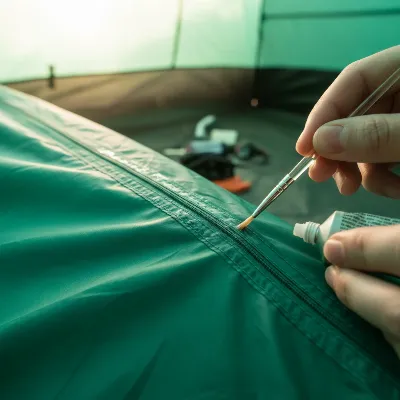 A person applying liquid seam sealer to the interior seams of a vibrant green camping tent, illustrating precise application.
2. Re-Waterproofing the Tent Fabric (Rainfly & Walls)
The Durable Water Repellent (DWR) finish on your tent’s outer fabric and the internal waterproof coating are crucial for shedding rain. When water no longer beads, it’s time to refresh these layers.
- Understanding DWR: DWR treatments cause water to form droplets and roll off the fabric, preventing saturation. This finish degrades over time due to dirt, abrasion, and UV exposure.
- Choosing a Waterproofing Product:
- Sprays: Easy to apply, suitable for synthetic fabrics. Examples include Nikwax Tent & Gear Solarproof (eco-friendly, UV protection), Kiwi Camp Dry (silicone-based, strong odor during application), 303 Fabric Guard, or superhydrophobic sprays like NeverWet.
- Wash-in treatments: Some products are designed to be applied in a washing machine, but these are generally less recommended for entire tents due to potential damage to internal coatings or breathability.
- Silicone-based vs. Water-based: Silicone sprays offer strong repellency but can be less breathable and environmentally impactful. Water-based options are often more eco-friendly and maintain breathability.
- Application process:
- Clean and dry: Ensure the tent fabric is clean and completely dry (unless the product specifically instructs application to a damp tent, which some Nikwax products do).
- Set up or lay flat: Pitch your tent or lay the fabric out flat in a well-ventilated area.
- Apply evenly: For spray-on products, hold the bottle 6-12 inches away and apply an even, consistent coat over the entire fabric surface, similar to applying an undercoat when painting. Don’t oversaturate.
- Dry thoroughly: Allow the tent to dry completely as per the product’s instructions. Some products may benefit from heat (e.g., from a hairdryer on a low setting) to help bond the treatment.
3. Waterproofing the Tent Floor
The tent floor is critical for preventing ground moisture from seeping into your sleeping area. If you notice dampness from below, it’s time to re-seal the floor.
- Importance of floor waterproofing: The floor’s coating protects against hydrostatic pressure from water pooling underneath the tent, keeping the interior dry.
- Method:
- Clean the floor: Thoroughly clean the tent floor with mild soap and water, ensuring all dirt, oils, and loose coating material are removed. Rinse completely and let it dry.
- Apply floor sealant: Lay the tent flat with the floor facing up. Use a waterproofing product specifically designed for tent floors. Apply thin, even coats, building coverage through multiple applications rather than a single thick layer.
- Allow ample drying time: Floor sealants often require 24 hours of drying time per coat. Plan your repair schedule accordingly. Using a ground cloth or footprint under your tent is also an excellent preventive measure to protect the floor from abrasion.
4. Special Considerations for Canvas Tents: Tent Seasoning
New canvas tents, and sometimes older ones, benefit from a process called “seasoning” to achieve optimal water resistance.
- What is seasoning? Seasoning encourages the natural cotton fibers of the canvas to swell when wet, effectively sealing the microscopic holes created by stitching and tightening the fabric weave.
- How to do it: Pitch your new canvas tent and thoroughly spray it with a garden hose, simulating a soft rain. Avoid using a pressure washer, as this can damage the canvas. Allow the tent to dry completely. Repeat this soak-and-dry cycle multiple times. This process allows the canvas to absorb water and for the fibers to swell and interlock, improving its natural water resistance. While seasoning makes a tent highly water-resistant, it won’t make it entirely waterproof in extreme conditions without additional treatment.
Best Waterproofing Products for DIY Tent Maintenance
Choosing the right product is essential for effective tent waterproofing. Here are some commonly recommended options:
- Nikwax Tent & Gear Solarproof: An environmentally friendly, water-based spray that not only waterproofs but also adds UV protection, extending the lifespan of your tent fabric. It’s often recommended for breathable fabrics and provides good coverage.
- Kiwi Camp Dry Heavy Duty Water Repellent: A silicone-based spray that is highly effective at repelling water. It’s a popular choice for tents, tarps, and other outdoor gear. Be aware that it has a strong odor during application, so it’s best used outdoors.
- Dry Guy Waterproofing Concentrate: This concentrate is diluted with water and can be rolled or sprayed on. It’s an eco-friendly option suitable for various fabrics, including nylon, polyester, and canvas, providing even, durable waterproofing.
- 303 Fabric Guard: A heavy-duty fabric guard known for its effectiveness on a variety of materials. It provides excellent water repellency but requires careful application and precautions.
- NeverWet Extreme Fabric Water & Mud Repellent: A superhydrophobic spray that creates a strong water-repellent coating, causing liquids to bead and roll off. It’s particularly useful for reinforcing water repellency on both new and older tents.
Testing Your Waterproofing Efforts
After you’ve applied all the necessary waterproofing treatments and allowed them to cure, it’s crucial to test your camping tent before your next trip. This step ensures that your efforts have been successful and gives you peace of mind.
- How to perform a water test:
- Set up the tent: Pitch your camping tent in your backyard or an open area.
- Simulate rain: Using a garden hose with a spray nozzle (not a high-pressure washer), gently spray water evenly over the entire tent, focusing on the rainfly, seams, and floor. Mimic natural rainfall conditions.
- Inspect for leaks: Enter the tent and carefully check the interior for any signs of water entry. Pay close attention to seams, zippers, corners, and any areas you specifically treated. Look for drips, damp spots, or puddles.
- Address any issues: If you find any leaks or dampness, mark the areas and reapply seam sealer or waterproofing spray as needed, allowing for proper drying before retesting. This test is the best way to confirm your tent is ready for its next adventure.
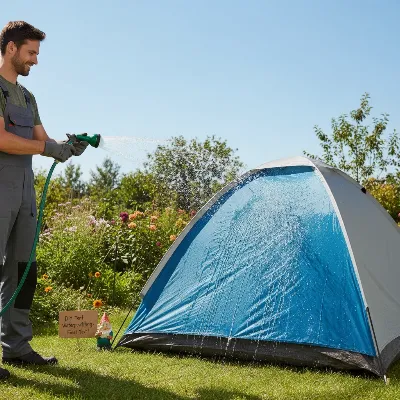 A person spraying water on a camping tent in a garden to test its waterproofing after DIY treatment.
Prolonging Your Tent’s Waterproof Life
Regular maintenance and proper care are essential to maximize the lifespan of your camping tent’s waterproofing and avoid frequent re-applications.
- Proper cleaning and drying: Always clean your tent after each trip, even if it just means wiping it down. Ensure your tent is completely dry before packing it away. Packing a damp tent can lead to mildew, odor, and rapid degradation of waterproof coatings.
- Correct storage: Store your tent loosely packed in a cool, dry, and dark place. Avoid compressing it tightly for long periods, as this can damage fabric coatings and create creases where leaks might form.
- Avoiding harsh conditions: When possible, pitch your tent in shaded areas to reduce UV exposure, which is a major factor in coating breakdown. Avoid camping in severe weather conditions for prolonged periods, as extreme rain and wind accelerate wear.
- Regular inspection and timely repairs: Periodically inspect your tent, especially before and after trips. Address small tears or peeling seams immediately to prevent them from becoming larger issues. Regular inspections, ideally once a year, will help you catch signs of wear before they lead to major leaks.
> “The longevity of your tent’s waterproofing largely depends on how you treat it. Simple habits like thorough drying and proper storage can significantly extend its life.” – Jane Doe, Outdoor Gear Specialist at TrailBlaze Outfitters
Conclusion
Ensuring your camping tent remains waterproof is fundamental to a comfortable and enjoyable outdoor experience. By understanding the causes of waterproofing failure, diligently following preparation steps, and applying the right DIY treatments for seams, fabric, and floors, you can effectively restore your tent’s protective capabilities. Regular testing and consistent maintenance practices—including proper cleaning, drying, and storage—will significantly prolong the life of your tent and keep it ready for countless adventures. Don’t let a leaky tent dampen your spirits; empower yourself with these DIY waterproofing techniques and embrace the elements with confidence. What’s your go-to method for keeping your camping tent dry?
Frequently Asked Questions
Can I use a regular silicone spray for waterproofing my tent?
While general-purpose silicone sprays might offer some temporary water repellency, it’s highly recommended to use products specifically designed for tent fabrics. These specialized sprays are formulated to bond correctly with tent materials, maintain breathability, and offer durable, long-lasting protection without damaging the fabric.
How often should I re-waterproof my camping tent?
Most tents will need re-waterproofing every 12-24 months, or more frequently depending on how often it’s used, the conditions it’s exposed to, and the type of fabric. Regular inspection and performing a water test annually are the best ways to determine if a refresh is needed.
What’s the difference between DWR and a waterproof coating?
A Durable Water Repellent (DWR) is an external finish that causes water to bead up and roll off the fabric surface, preventing saturation. A waterproof coating (like polyurethane or silicone) is typically applied to the interior of the fabric and serves as the primary barrier preventing water from passing through the material itself. Both work together for optimal protection.
Can I waterproof a tent from the inside?
While the primary waterproof coating is usually on the inside of the rainfly fabric, most re-waterproofing sprays and DWR treatments are applied to the exterior surface. Seam sealers, however, are often applied to the interior seams of the rainfly where factory tape might be. Always follow the specific product instructions.
What if my tent fabric is peeling on the inside?
If the internal waterproof coating of your tent fabric is flaking or peeling, it indicates that the coating is degrading. You can try to remove as much of the loose coating as possible and then apply a new liquid waterproofing product designed for tent floors or coatings. However, extensive peeling might signify it’s time to consider a new tent, as full restoration can be challenging.
Frequently Asked Questions
Can I use a regular silicone spray for waterproofing my tent?
No, it is highly recommended to use products specifically designed for tent fabrics rather than general-purpose silicone sprays. Specialized sprays are formulated to bond correctly with tent materials, maintain breathability, and offer durable, long-lasting protection without causing damage.
How often should I re-waterproof my camping tent?
Most tents require re-waterproofing every 12-24 months, though this can vary based on usage frequency, exposure conditions, and fabric type. Annual inspection and a water test are the best ways to determine if a refresh is needed for optimal protection.
What is the difference between DWR and a waterproof coating?
A Durable Water Repellent (DWR) is an external finish that causes water to bead and roll off the fabric surface, preventing saturation. A waterproof coating, typically polyurethane or silicone, is applied to the interior of the fabric and acts as the primary barrier to prevent water from passing through the material itself. Both layers work together for comprehensive protection.
Can I waterproof a tent from the inside?
While the primary waterproof coating is usually on the inside of the rainfly fabric, most re-waterproofing sprays and DWR treatments are applied to the exterior surface. Seam sealers, however, are often applied to the interior seams where factory tape might be peeling. Always follow the specific product instructions for best results.
What if my tent fabric is peeling on the inside?
If the internal waterproof coating of your tent fabric is flaking or peeling, it indicates degradation. You can attempt to remove loose coating and apply a new liquid waterproofing product designed for tent floors or coatings. However, extensive peeling might suggest it's time to consider replacing the tent, as full restoration can be challenging.
Waterproof a Leaky Camping Tent
This guide outlines the steps to effectively re-waterproof your camping tent, addressing seams, fabric, and floors to ensure it remains dry and functional for future adventures.
Set up your tent in a well-ventilated area and clean it thoroughly with mild, non-detergent soap and water. Rinse completely and allow it to dry for 24-48 hours. After drying, inspect for any rips, holes, or peeling seam tape, marking problem areas for repair.
Ensure seams are clean and dry. Apply a liquid seam sealer (polyurethane or silicone-based, matching your tent fabric) along all seams, especially on the rainfly and floor. Apply a thin, even layer and allow it to dry completely for several hours or up to 24 hours per coat, as per manufacturer instructions.
With the tent clean and dry, pitch it or lay the fabric flat in a well-ventilated area. Apply a waterproofing spray like Nikwax Tent & Gear Solarproof or Kiwi Camp Dry evenly over the entire fabric surface, holding the bottle 6-12 inches away. Allow the tent to dry thoroughly according to the product's instructions.
Clean the tent floor with mild soap and water, then rinse and dry completely. Lay the tent flat with the floor facing up and apply a waterproofing product specifically designed for tent floors. Apply thin, even coats, allowing ample drying time (often 24 hours per coat) between applications.
After all treatments have cured, pitch your tent and simulate rain using a garden hose with a spray nozzle. Gently spray water over the entire tent, focusing on treated areas. Enter the tent to check for any leaks or damp spots. Reapply sealants or sprays to any problem areas and retest until the tent is completely dry inside.

I’ve had my trusty tent for years, but after a few seasons, it started letting in moisture during heavy rains. I tried the silicone coating method mentioned here, and it worked wonders! My tent feels brand new, and I’m confident it’ll hold up against any downpour now. Definitely saved me from buying a whole new tent.
The advice on identifying leaks was helpful, but I found the process of applying the polyurethane coating a bit messy and time-consuming. My tent floor still had a tiny bit of dampness after a really long rain, even after I thought I’d sealed everything. It’s better than before, but not perfect.
Great tips! I always wondered why my ‘waterproof’ tent eventually started leaking. The explanation about UV exposure and abrasion making the DWR finish fail really made sense. I used the seam sealer technique on my older backpacking tent, and it made a huge difference on my last trip. No more damp sleeping bag!
This was exactly what I needed! My family’s tent is still in great shape, but the fabric was definitely losing its water-repellent properties. I followed the steps for refreshing the DWR finish, and now water beads right off like it used to. It’s awesome to know I can extend the life of our gear with these simple DIY methods.