Choosing the best lightweight backpacking camping tent for 2026 involves balancing minimal weight with maximum protection and comfort. The top models for 2026 include the Big Agnes Copper Spur UL2 for overall freestanding performance, the Zpacks Duplex for ultralight trekking pole enthusiasts, the Durston X-Mid Pro 2 for an excellent balance of weight and space in a trekking pole tent, and the Nemo Hornet Elite Osmo 2P as a leading ultralight semi-freestanding option. These tents are engineered to minimize weight and packed volume, utilizing advanced materials like Dyneema Composite Fabric (DCF) or proprietary OSMO fabric, making them ideal for adventurers who prioritize efficiency and mobility on the trail.
This comprehensive guide will navigate you through the essential aspects of choosing the best lightweight backpacking camping tent. We’ll delve into different types, highlight key features to consider, review the top models making waves in 2026, and provide crucial tips for their use and maintenance. Whether you’re a seasoned thru-hiker or planning your first overnight trip, understanding these factors will empower you to select a tent that perfectly complements your adventurous pursuits, ensuring comfort and peace of mind on every journey.
What is a Lightweight Backpacking Tent and Why Do You Need One?
A lightweight backpacking tent is specifically engineered to minimize weight and packed volume, making it easy to carry over long distances without sacrificing essential protection. Unlike heavier car camping tents, these shelters prioritize efficiency, often utilizing advanced materials and streamlined designs. Their primary role in outdoor activities is to provide a reliable refuge from varying weather conditions, including rain, wind, and even light snow, while also offering a private space for rest and gear storage. For shop curated camping tents on this site.
The benefits of choosing a lightweight tent are profound for any backpacker. Reducing your pack weight significantly lessens physical fatigue, allowing you to cover more ground, hike faster, and enjoy the scenery without being burdened by excessive bulk. This enhanced mobility translates into a more enjoyable and sustainable outdoor experience, whether you’re embarking on a challenging thru-hike, a multi-day trek through mountainous terrain, or a leisurely weekend escape to the wilderness. These tents are designed for dynamic adventurers who value freedom of movement and efficient travel.
Types of Lightweight Backpacking Tents
The landscape of lightweight backpacking tents is diverse, with designs tailored to different priorities in terms of weight, space, and ease of setup. Understanding the core distinctions between freestanding, semi-freestanding, and trekking pole tents is crucial for making an informed choice.
Freestanding Tents
Freestanding tents are characterized by their self-supporting pole structure, allowing them to be pitched and moved without needing stakes to hold their shape. This design offers immense flexibility, as you can set them up on hard surfaces like rock slabs or sandy beaches where staking might be impossible. They typically feature a traditional dome or modified dome shape, providing excellent internal volume and stability.
- Pros: Exceptionally easy and quick to set up, can be moved to adjust campsite after pitching, generally very stable in wind when fully staked.
- Cons: Tends to be heavier than other types due to a more robust pole system, can have a larger packed size.
- Ideal For: Backpackers who prioritize convenience, seek maximum internal space, or frequently camp in varied terrain where staking is a challenge. A prime example in 2026 is the Big Agnes Copper Spur UL2, renowned for its impressive balance of weight, space, and features.
Semi-Freestanding Tents
Semi-freestanding tents offer a middle ground, combining some of the ease of freestanding designs with the weight savings of non-freestanding shelters. They typically have a primary pole structure that provides most of the tent’s shape, but require a few stakes to fully tension and maximize internal space, particularly at the vestibules or corners.
- Pros: Lighter than fully freestanding tents while still offering a relatively easy setup and good structural integrity, often more space-efficient for their weight.
- Cons: Still requires a few stakes, limiting some pitching options compared to fully freestanding models.
- Ideal For: Hikers looking for a good balance between weight reduction and ease of use, who are comfortable with minimal staking. The Nemo Hornet Elite Osmo 2P is a top-tier semi-freestanding option for 2026, celebrated for its ultralight construction and smart design.
Trekking Pole Tents (Non-Freestanding)
Trekking pole tents, or non-freestanding tents, are the minimalist’s choice, designed to be supported by your hiking trekking poles rather than dedicated tent poles. This ingenious design eliminates the weight of a separate pole set, making them the lightest tent option available. They are typically single-wall shelters or tarp-style setups, requiring careful pitching and proper staking to achieve their intended shape and stability.
- Pros: The ultimate in lightweight and compact packing, significantly reduces overall pack weight, often highly storm-worthy when pitched correctly.
- Cons: Requires trekking poles (or separate tent poles), more complex and time-consuming to set up, needs ground where stakes can be firmly placed, can be prone to condensation.
- Ideal For: Experienced ultralight backpackers, thru-hikers, and fastpackers who prioritize minimal weight above all else and are skilled in pitching their shelter. The Zpacks Duplex and Durston X-Mid Pro 2 are standout trekking pole tents for 2026, known for their exceptional weight-to-space ratio and innovative designs.
| Tent Type | Key Features | Weight Profile | Setup Difficulty | Ideal Conditions |
|---|---|---|---|---|
| Freestanding | Self-supporting poles, traditional structure | Moderate | Easy | Varied terrain, convenience |
| Semi-Freestanding | Partial pole support, needs some stakes | Light | Moderate | Good balance, lighter trails |
| Trekking Pole | Uses hiking poles for support, requires stakes | Ultralight | Advanced | Experienced users, thru-hiking |
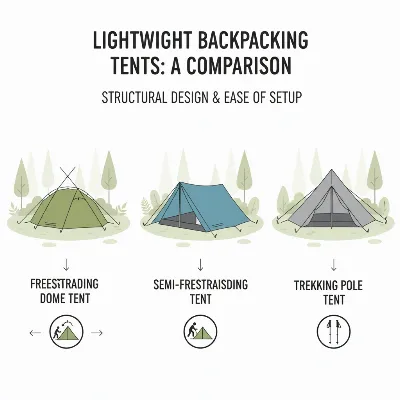 An illustrative comparison of freestanding, semi-freestanding, and trekking pole tents set up in a lush forest environment, showing their distinct structures and minimal footprints
How to Choose the Right Lightweight Backpacking Tent for Your Needs
Selecting the perfect lightweight backpacking tent involves a careful assessment of your specific hiking style, trip demands, and personal preferences. It’s a balance between shedding ounces and ensuring adequate comfort and protection.
Identify Your Trip Type and Duration
Your intended use is the most crucial starting point. Are you planning short weekend getaways, or embarking on a months-long thru-hike? Solo adventures have different requirements than trips with a partner or small group. For multi-week excursions, durability and livability might outweigh marginal weight savings, whereas a weekend warrior might prioritize ease of setup. Consider the specific trails you’ll be on – alpine expeditions require more robust weather protection than desert treks.
Capacity (Number of Users)
Backpacking tents are typically categorized by person capacity (1P, 2P, 3P, etc.). While ultralight models are designed to be snug to save weight, many hikers choose to size up by one person (e.g., a 2-person tent for solo use) for added comfort, extra gear storage, or if they plan to bring a pet. There’s no industry standard for per-person dimensions, so always check the floor area and peak height specifications to ensure it meets your comfort needs.
Weight vs. Livability Trade-off
This is the central dilemma of ultralight backpacking. Shaving weight often means compromising on interior space, headroom, and extra features like multiple pockets or vestibules. While less weight on your back can vastly improve your day on the trail, a bad night’s sleep due to a cramped or unprotected shelter can ruin an entire trip. Evaluate how much time you expect to spend inside your tent and how much you value comfort features against the weight penalty.
> “Ultralight tents tend to involve trade-offs that may not work for everyone, so in thinking about buying one it’s important to consider how much time you spend at camp and how much you value comfort features. Less weight on your back will vastly improve your day on trail, but a bad night’s sleep can ruin an entire trip.” – Outdoor Gear Lab Reviewer
Weather Resistance and Seasonality
Most lightweight backpacking tents are designed for three-season use (spring, summer, fall), offering a balance of ventilation and protection from rain, wind, and light snow. They are not built for sustained exposure to harsh winter storms or heavy snowfall. Look for features like robust rainflies, factory-sealed seams, and stable pole geometries for reliable performance in adverse weather. Good ventilation is also key to prevent condensation build-up inside the tent.
Materials and Durability
The materials used are paramount to a tent’s weight and performance.
- Dyneema Composite Fabric (DCF): Extremely lightweight, highly waterproof, and doesn’t sag when wet. It’s also very strong but comes at a premium price. Often found in high-end ultralight tents like those from Zpacks or Durston Pro series.
- Silnylon (silicone-impregnated nylon) / Silpoly (silicone-impregnated polyester): Lighter than traditional nylon, offers good water resistance, and is more affordable than DCF. Silpoly tends to absorb less water and sag less when wet than silnylon.
- Denier (D): Indicates fabric thickness and durability. Ultralight tents use thinner fabrics (typically 7-20D), which are more prone to punctures and tears than heavier materials, requiring careful site selection and handling.
Packed Size and Compatibility
Beyond weight, the packed size of your tent is crucial for how it fits into your backpack alongside other gear. Ultralight tents are designed to compress significantly. Consider how the tent’s components (body, fly, poles, stakes) pack down and if they are compatible with your backpack’s internal volume or external attachment points. Some hikers even ditch the stuff sack and pack components separately to optimize space.
Ease of Setup
The time and effort required to pitch your tent can vary significantly. Freestanding tents are generally the easiest, while trekking pole tents demand more practice and specific ground conditions for proper staking. If you often arrive at camp late or in bad weather, a quick and intuitive setup can be a game-changer. Color-coded poles and clips can also simplify the process.
Budget
Generally, the lighter and more advanced the materials, the higher the price. While ultralight tents can be a significant investment, they can dramatically improve your hiking experience. Determine your budget and look for the best quality and features within that range. There are excellent value-oriented lightweight tents available that balance cost with performance.
Additional Features
Consider supplementary features that enhance comfort and functionality:
- Vestibules: Covered areas outside the tent body for storing muddy boots, backpacks, and cooking gear.
- Internal Pockets and Gear Lofts: For organizing small items and keeping essentials within reach.
- Vents: To improve airflow and minimize condensation.
- Dual Doors: Offer easier entry and exit, especially for two people, and better ventilation.
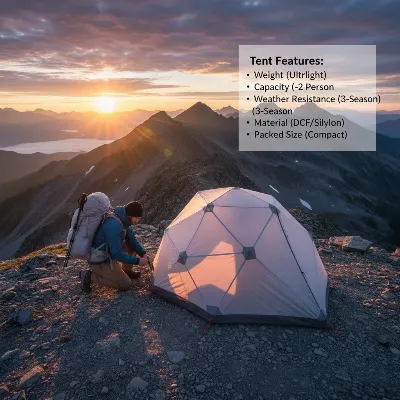 A backpacker standing next to a lightweight tent at dawn, with a checklist overlay highlighting key features like weight, capacity, and materials
Top Lightweight Backpacking Tents for 2026
The market for lightweight backpacking tents is highly competitive, with innovations constantly pushing the boundaries of weight, durability, and livability. Here are some of the standout models for 2026, each offering a unique blend of features for different types of adventurers:
Big Agnes Copper Spur UL2 (Best Overall Freestanding)
The Big Agnes Copper Spur UL2 continues to be a perennial favorite, often hailed as the benchmark for freestanding lightweight backpacking tents. It masterfully balances weight, interior space, and thoughtful features, making it an exceptional choice for most backpackers. This tent offers a generous 29 square feet of floor space in the two-person version, solid headroom facilitated by pre-bent poles and steep walls, and dual doors with spacious vestibules for gear storage. Big Agnes has continually refined its materials, enhancing strength and reducing water absorption, ensuring reliable performance without a significant weight penalty. Its intuitive setup and livable design make it a versatile option for various conditions.
- Pros: Excellent space-to-weight ratio for a freestanding tent, easy setup, two doors and vestibules, good headroom, durable materials.
- Cons: Not as ultralight as trekking pole tents, higher price point.
- Ideal User: Backpackers who prioritize convenience, comfort, and a freestanding design without wanting to carry excessive weight.
Zpacks Duplex (Best Ultralight Trekking Pole Tent)
For the dedicated ultralight enthusiast, the Zpacks Duplex remains an icon. Made from Dyneema Composite Fabric (DCF), this trekking pole tent offers unparalleled weight savings, often weighing less than two pounds for a two-person model. The DCF construction ensures it’s incredibly waterproof, tough, and doesn’t sag when wet, making it highly reliable in adverse weather. While it requires trekking poles for setup and proper staking, its interior space is surprisingly generous for its weight, with dual doors and vestibules. The Duplex is a significant investment but a worthwhile one for thru-hikers and long-distance adventurers seeking the absolute minimum in base weight.
- Pros: Extremely lightweight, superior waterproofness, durable DCF fabric, excellent space for its weight, packs down incredibly small.
- Cons: Very expensive, requires trekking poles, not freestanding, requires practice to pitch efficiently.
- Ideal User: Thru-hikers, experienced ultralight backpackers, and those willing to invest in top-tier gear for maximum weight savings.
Durston X-Mid Pro 2 (Best Balance of Weight and Space in Trekking Pole Tent)
The Durston X-Mid Pro 2 has rapidly gained a reputation for its innovative design that strikes an exceptional balance between minimal weight, generous living space, and storm-worthiness. Its patented offset pole design, which positions two trekking poles diagonally, maximizes interior volume and headroom, accommodating tall hikers and two standard sleeping pads comfortably. Crafted from DCF, the X-Mid Pro 2 is not only ultralight but also offers robust weather protection and a surprisingly simple setup for a trekking pole tent. It features large vestibules and can be pitched quickly.
- Pros: Outstanding interior volume for its weight, very stable in wind, easy and intuitive trekking pole setup, high-quality DCF materials, storm-worthy geometry.
- Cons: Expensive, single-wall design requires careful condensation management, requires a relatively large footprint for pitching.
- Ideal User: Ultralight backpackers who want ample space and comfort without compromising on weight, and who appreciate clever engineering.
Nemo Hornet Elite Osmo 2P (Best Ultralight Semi-Freestanding)
The Nemo Hornet Elite Osmo 2P stands out as a premium ultralight, semi-freestanding tent that delivers an impressive blend of low weight and comfortable features. Weighing just over two pounds for the two-person model, it achieves its ultralight status without sacrificing the convenience of dual doors and vestibules. The tent utilizes Nemo’s proprietary OSMO fabric, known for its enhanced water repellency, less stretch when wet, and improved durability. While its fabric is thin, demanding careful handling, its intuitive semi-freestanding design and thoughtful details make it a highly livable option in its weight class, suitable for both serious thru-hikers and those new to the ultralight world.
- Pros: Incredibly lightweight with dual doors/vestibules, excellent weather reliability for its class, easy semi-freestanding setup, premium OSMO fabric.
- Cons: Thin fabric requires extra care, floor plan can be tight for two, higher price.
- Ideal User: Backpackers who want an ultralight tent but prefer the added structure and convenience of a semi-freestanding design over a pure trekking pole shelter.
Using and Maintaining Your Lightweight Backpacking Tent
Proper usage and diligent maintenance are key to maximizing the lifespan and performance of your lightweight backpacking tent, especially given the delicate nature of some ultralight materials.
Setup Tips for Lightweight Tents
- Site Selection: Always choose a campsite free of sharp rocks, sticks, or other debris that could puncture your tent floor. Clear the area thoroughly before pitching. For trekking pole tents, ensure the ground is suitable for firm stake placement.
- Practice: Familiarize yourself with your tent’s setup at home before your first trip, especially for non-freestanding models. Practice makes perfect, allowing for quick and efficient pitching on the trail, even in challenging conditions.
- Footprint: Consider using a lightweight footprint (groundsheet) to protect the tent floor from abrasion and extend its life. This is particularly important for tents made with thin denier fabrics.
- Tensioning: Proper tensioning is crucial for both stability and maximizing internal space. Ensure all guylines are taut but not overstretched, especially in windy conditions. Adjust as needed throughout the night if materials stretch or shrink due to temperature and humidity changes.
Essential Care During Use
- Ventilation: Utilize all available vents, doors, and mesh panels to promote airflow and minimize condensation, which is a common challenge in ultralight tents.
- Avoid Punctures: Be mindful of sharp objects inside and outside the tent. Avoid wearing shoes inside the tent to prevent damage to the floor.
- Sunlight Exposure: While generally durable, prolonged exposure to direct UV rays can degrade tent fabrics over time. When possible, pitch your tent in the shade or take it down during long periods of direct sun exposure if you’re not using it.
Cleaning and Storage
- Dry Thoroughly: The most critical maintenance step is to ensure your tent is completely dry before packing it away for storage. Even a small amount of moisture can lead to mildew, which can damage fabrics and create unpleasant odors. Hang your tent to air dry in a well-ventilated area, away from direct sunlight, for at least 24-48 hours.
- Spot Clean: For dirt and mud, use a soft sponge or cloth with lukewarm water and a mild, non-detergent soap (like specialized gear cleaner). Avoid harsh chemicals or machine washing, as these can strip waterproof coatings.
- Proper Storage: Once clean and dry, store your tent loosely in a large mesh bag or an old pillowcase, rather than tightly compressed in its stuff sack. This allows the fabrics and coatings to breathe and helps maintain their integrity over time. Store it in a cool, dry place away from direct sunlight.
- Seam Sealing/Re-waterproofing: Over time, the factory seam sealing or waterproof coating may wear down. Inspect your tent periodically and reapply seam sealer or a DWR (Durable Water Repellent) treatment as needed to maintain its waterproofness.
Repair Considerations
Even with the best care, lightweight tent fabrics can get damaged. Carry a small repair kit with adhesive patches (like Tenacious Tape or silnylon/DCF repair tape) and seam sealer for quick field repairs. For larger tears or pole damage, seek professional repair services to ensure the longevity of your investment.
Conclusion
Choosing the ideal lightweight backpacking camping tent for 2026 is an investment in your outdoor experience. By carefully considering your specific needs, understanding the different types of tents available, and familiarizing yourself with the top models, you can find a shelter that balances minimal weight with maximum protection and comfort. Whether you opt for the versatile Big Agnes Copper Spur UL2, the ultimate ultralight Zpacks Duplex, the innovative Durston X-Mid Pro 2, or the balanced Nemo Hornet Elite Osmo 2P, each offers a gateway to more enjoyable and less strenuous adventures.
Remember, the lightest tent isn’t always the best tent for everyone. Prioritize livability, durability, and weather protection alongside weight savings to ensure your portable home truly enhances your journey. With the right lightweight tent packed in your backpack, you’re not just carrying gear; you’re carrying the promise of countless memorable nights under the stars. What will your next adventure look like with the perfect lightweight tent?
Frequently Asked Questions
Is a 1-person ultralight tent worth the sacrifice in space?
For solo backpackers prioritizing minimal weight and pack size, a 1-person ultralight tent is absolutely worth it. While snug, the trade-off in space allows for significantly faster and less fatiguing travel, making long-distance treks much more manageable.
What is Dyneema Composite Fabric (DCF)?
Dyneema Composite Fabric (DCF), formerly Cuben Fiber, is an extremely lightweight, waterproof, and strong material made from ultra-high-molecular-weight polyethylene fibers laminated between two sheets of polyester film. It’s highly valued for its durability, resistance to sagging when wet, and exceptional strength-to-weight ratio in ultralight tents.
Can I use a trekking pole tent without trekking poles?
Trekking pole tents are designed to use your hiking trekking poles for support and cannot be set up without them. If you do not hike with trekking poles, you would need to purchase separate, dedicated tent poles specifically designed for your non-freestanding tent, which would add weight to your pack.
How do I manage condensation in ultralight tents?
Managing condensation in ultralight tents, especially single-wall designs, is crucial. Maximize ventilation by utilizing all vents, opening doors when weather permits, and pitching in areas with good airflow. Avoid camping near standing water. Ensure your gear isn’t touching the tent walls to prevent moisture transfer.
What’s the average lifespan of an ultralight tent?
The lifespan of an ultralight tent varies greatly depending on its material, usage, and maintenance. Tents made with thinner fabrics or DCF might last 300+ nights or several years with careful use. Regular cleaning, proper storage, cautious site selection, and prompt repairs can significantly extend its life.
Frequently Asked Questions
Is a 1-person ultralight tent worth the sacrifice in space?
For solo backpackers prioritizing minimal weight and pack size, a 1-person ultralight tent is absolutely worth it. While snug, the trade-off in space allows for significantly faster and less fatiguing travel, making long-distance treks much more manageable and enjoyable.
What is Dyneema Composite Fabric (DCF) used in tents?
Dyneema Composite Fabric (DCF), formerly Cuben Fiber, is an extremely lightweight, waterproof, and strong material made from ultra-high-molecular-weight polyethylene fibers laminated between two sheets of polyester film. It is highly valued for its durability, resistance to sagging when wet, and exceptional strength-to-weight ratio in high-end ultralight tents like the Zpacks Duplex.
Can I use a trekking pole tent if I don't carry trekking poles?
Trekking pole tents are designed to use your hiking trekking poles for support and cannot be set up without them. If you do not hike with trekking poles, you would need to purchase separate, dedicated tent poles specifically designed for your non-freestanding tent, which would add weight to your pack.
How can I effectively manage condensation inside an ultralight tent?
Managing condensation in ultralight tents, especially single-wall designs, is crucial. Maximize ventilation by utilizing all vents, opening doors when weather permits, and pitching in areas with good airflow. Avoid camping near standing water and ensure your gear isn't touching the tent walls to prevent moisture transfer.
What is the typical lifespan of an ultralight backpacking tent?
The lifespan of an ultralight tent varies greatly depending on its material, usage, and maintenance. Tents made with thinner fabrics or DCF might last 300+ nights or several years with careful use. Regular cleaning, proper storage, cautious site selection, and prompt repairs can significantly extend its life.
How to Choose a Lightweight Backpacking Tent
Selecting the right lightweight backpacking tent involves assessing your trip type, capacity needs, and balancing weight with livability. Consider materials, packed size, ease of setup, and budget to find the perfect shelter for your adventures.
Determine if you're planning short weekend trips or multi-month thru-hikes. This will influence the required durability, livability, and weather protection of your tent. Solo adventures have different needs than group trips.
Choose a tent based on the number of users (1P, 2P, 3P). Many hikers size up for extra comfort or gear storage. Always check floor area and peak height specifications to ensure it meets your personal comfort requirements.
Decide how much weight you are willing to sacrifice for interior space, headroom, and features. Less weight improves hiking, but a cramped tent can reduce comfort. Consider how much time you expect to spend inside your tent.
Research materials like Dyneema Composite Fabric (DCF), Silnylon, or Silpoly, and understand their denier (D) rating. Thinner fabrics (7-20D) are lighter but require more careful handling and site selection to prevent damage.
Ensure the tent's packed size fits your backpack. Practice setting up your tent at home, especially non-freestanding models, to ensure quick and efficient pitching on the trail. Look for features like color-coded poles for easier assembly.

I tried out the Nemo Hornet Elite Osmo 2P because I was looking for a semi-freestanding option that was still super light. It’s definitely light and packs down small, which is great. However, I found the interior space a little snug for two people and their packs. It’s fine for solo trips, but for two, it feels a bit cramped, even with the proprietary OSMO fabric making it feel durable.
The Durston X-Mid Pro 2 is everything I hoped for and more. The balance of weight and interior space is truly impressive for a trekking pole tent. I was hesitant about a non-freestanding tent at first, but the setup is intuitive, and it feels incredibly stable even in windy conditions. It’s clear why Dyneema Composite Fabric (DCF) is so popular; this tent is a beast!
I finally pulled the trigger on the Zpacks Duplex after reading about it here, and wow, what a game changer! The ultralight design is no joke, and using my trekking poles for setup was surprisingly easy. It shaved so much weight off my pack for my last multi-day trip in the Sierras. Definitely recommend for anyone serious about cutting down on bulk.
The Big Agnes Copper Spur UL2 has been my go-to for a while now, and it’s still fantastic. The freestanding setup is super convenient, especially when you’re tired after a long day. I appreciate the balance of weight and durability. My only minor gripe is that the vestibule space, while adequate, could be a tiny bit larger for two people’s gear.