A camping tent leaks primarily due to degraded seam tape, physical damage like holes, or a worn-out waterproof coating on the rainfly and floor. Condensation, improper tent setup, or touching interior walls during rain can also lead to perceived leaks. Fortunately, many common tent leaks can be identified and repaired with simple do-it-yourself solutions, saving both money and future frustrations on outdoor adventures.
What Causes a Camping Tent to Leak?
Before you can fix a leaky tent, you need to identify the culprit. Often, campers mistake condensation for a leak. Condensation occurs when warm, moist air inside the tent (from breathing or cooking) meets the cooler fabric walls, forming water droplets that can trickle down. Real leaks, however, are a direct breach of the tent’s waterproof barrier, allowing external water to seep through. Several factors can cause your tent to spring a leak, ranging from wear and tear to improper setup.
Physical damage such as small holes, rips, or punctures can be an obvious source of water ingress. These can result from sharp objects, animal encounters, or even abrasive terrain during setup. Another frequent point of failure is the seams where fabric panels are stitched together. While most modern tents feature factory-taped seams, this tape can degrade, crack, or peel over time, creating tiny pathways for water. Similarly, the waterproof coating on your tent’s rainfly and floor, typically polyurethane (PU), can break down due to age, UV exposure, or harsh cleaning agents, leading to a sticky, flaky surface that no longer repels water effectively. For see our camping tents recommendations on this site.
An often-overlooked cause is touching the interior walls of your tent during rain. Water droplets on the exterior can lose their surface tension when pushed from the inside, allowing them to seep through the fabric via capillary action. Issues with the groundsheet can also lead to dampness. If you don’t use a protective footprint, if the footprint is ill-fitting, or if water gets trapped between the tent floor and the ground, moisture can be forced up through the fabric due to pressure from campers and gear. Lastly, improper tent setup, such as insufficient tension, exposed zippers, or a rainfly that doesn’t adequately cover the tent body, can create vulnerabilities for water to exploit.
Top 5 DIY Fixes for a Leaking Camping Tent
Don’t let a few drips sideline your outdoor plans. With some basic tools and a little effort, you can often fix your tent leaks and extend its lifespan significantly. Here are five quick, DIY solutions to get your tent back to its waterproof best.
1. Re-Seal Leaky Seams
|
Our Picks for the Best Camping Tent in 2026
As an Amazon Associate I earn from qualifying purchases.
|
||
| Num | Product | Action |
|---|---|---|
| 1 | Coleman Sundome Camping Tent with Rainfly, 2/3/4/6 Person Tent Sets Up in 10 Mins, Weatherproof Shelter for Camping, Festivals, Backyard, Sleepovers, & More |

|
| 2 | Coleman Sundome Camping Tent with Rainfly, 2/3/4/6 Person Tent Sets Up in 10 Mins, Weatherproof Shelter for Camping, Festivals, Backyard, Sleepovers, & More |
|
| 3 | Coleman Sundome Camping Tent with Rainfly, 2/3/4/6 Person Tent Sets Up in 10 Mins, Weatherproof Shelter for Camping, Festivals, Backyard, Sleepovers, & More |
|
| 4 | Amazon Basics Camping Tent, 3-Season Dome Design with Rainfly |
|
| 5 | Golabs 3 Person Camping Tent w/ 9.5x8.5 ft Canopy, 3-Minute Setup by Pre-Attached Pole, PU1500mm Waterproof, 4 Side Mesh Tent Top & Door & Ventilation, Portable Family Tent w/Carry Bag & Pocket & Hook |
|
| 6 | Night Cat Pop-up Camping Tent: 2 Person Tent Waterproof Instant Easy Setup Family Tent |
|
| 7 | CAMPROS CP Tent 8 Person Camping Tents, Weather Resistant Family Tent, 5 Large Mesh Windows, Double Layer, Divided Curtain for Separated Room, Portable with Carry Bag |
|
| 8 | 2-3 Person Camping Tent, Instant Pop Up Tents for Camping - 40s Automatic Easy Setup Tent with Rainfly, Double-Layer 3500mm Waterproof & Windproof Instant Tents for Hiking Backpacking |
|
| 9 | FanttikOutdoor Camping Tent 4/6/8/10 Person Instant Cabin Tent Setup in 60 Seconds with Rainfly & Windproof Portable with Carry Bag for Family Camping & Hiking |
|
| 10 | Tents for Camping 2/3/4 Person with Rainfly - Camping Tent Waterproof Windproof Easy Setup, Portable Double Layer Outdoor Dome Tent, Backpacking Tents for Adventure Backyard Hiking |
|
One of the most common leak culprits is degraded seam tape or unsealed stitching. Over time, the factory-applied seam tape can peel, crack, or lose its adhesion, creating tiny gaps where water can penetrate. Even tents with robust fabrics can leak if the seams are not properly sealed.
To fix this, first, pitch your tent inside out or lay the rainfly flat with the interior seams exposed. Carefully remove any loose or peeling seam tape using your fingers or a soft brush. Clean the seam areas thoroughly with rubbing alcohol or a mild soap and water solution, then let them dry completely. Once clean and dry, apply a specialized seam sealer. For polyurethane-coated fabrics, a urethane-based sealant (like Gear Aid Seam Grip WP) is ideal. If your tent is made of silnylon (silicone-impregnated nylon), you’ll need a silicone-based sealer (like Gear Aid Seam Grip SIL). Apply a thin, even coat directly along the stitch lines, ensuring full coverage, especially at corners and stress points. Allow the sealant to cure fully, which can take 6-24 hours depending on the product and humidity, before packing your tent.
2. Patch Holes and Tears in Fabric
Accidental rips and punctures can happen to any tent, but they are often the easiest leaks to fix. A small tear can quickly become a large problem if left unaddressed, allowing water to stream in.
Start by cleaning the area around the hole with rubbing alcohol or a damp cloth to remove any dirt or debris, then let it dry completely. Choose the appropriate repair patch for your tent fabric. Self-adhesive repair patches, such as Tenacious Tape, are excellent for quick and durable repairs on most tent materials, including nylon and polyester. For larger tears or specific fabric types like canvas, you might need a glue-on patch made from ripstop nylon or the tent’s original material. Cut the patch so it extends at least one inch beyond the edges of the hole on all sides. For self-adhesive patches, simply peel off the backing and press it firmly over the tear, smoothing out any air bubbles. For glue-on patches, apply a suitable fabric adhesive to the patch and press it firmly onto the tent. For added strength, especially on high-stress areas, consider applying a second patch on the inside of the tent or reinforcing the edges with waterproof thread if you have sewing skills. Allow sufficient cure time for any adhesives used before subjecting the tent to rain.
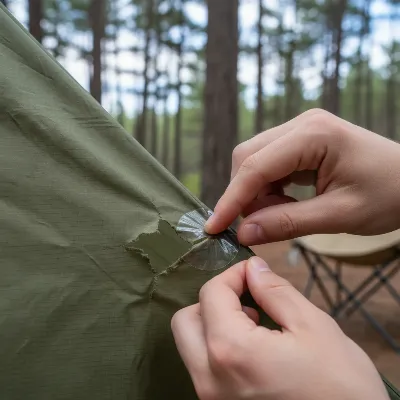 DIY repair of a small tear on a green camping tent fabric with an adhesive patch, close-up shot.
3. Re-Waterproof the Tent Fabric (Rainfly and Floor)
Over time, the durable water repellent (DWR) coating on your tent’s rainfly can wear off, causing water to soak into the fabric instead of beading up and rolling away. Similarly, the polyurethane coating on your tent floor can flake or become sticky, leading to leaks from the ground up.
To restore the water repellency of your rainfly, clean it thoroughly with a gear-safe cleaner or mild soap and water. Set it up or lay it flat in a well-ventilated area, ensuring it’s completely dry. Then, apply a DWR restoration spray specifically designed for tent fabrics. Spray an even coat over the entire exterior surface, following the product’s instructions. Allow it to dry fully before packing.
For a sticky or flaking tent floor, the repair is slightly different. You’ll need to remove the old, deteriorated polyurethane coating first. You can often do this by gently scraping with a plastic tool or scrubbing with a dry brush and isopropyl alcohol. Once the old coating is removed and the surface is clean and dry, apply a new liquid urethane fabric sealer (like Gear Aid Seam Grip TF) to the entire floor area. Use a sponge applicator to spread a thin, even layer, allowing it to cure completely, which typically takes 12-24 hours.
4. Optimize Tent Pitch and Prevent Internal Contact
Sometimes, leaks aren’t due to damaged fabric but rather how your tent is pitched or used. Two common issues are water seeping in from the ground or being drawn in by internal contact with the tent walls.
To prevent leaks from the ground, always try to pitch your tent on high, well-drained ground. Avoid depressions where water can pool. Using a footprint or ground cloth underneath your tent is crucial. This extra layer protects your tent floor from abrasion and prevents ground moisture from pushing through. Ensure your footprint is sized correctly – it should be slightly smaller than your tent floor so that rainwater running off the fly doesn’t collect on the footprint and get trapped underneath the tent, which can force water upwards. Inside the tent, avoid touching the interior walls during rain. This breaks the surface tension of water on the outside, allowing it to wick through. Reorganize your gear to ensure nothing is leaning against the tent fabric, creating pressure points that can facilitate leaks. Proper guyline tension also helps maintain the tent’s shape, ensuring the rainfly effectively sheds water and the “bathtub” floor remains elevated and taut.
5. Secure Zippers and Vents
Often overlooked, zippers and vents can be minor but consistent sources of leaks if not properly managed. While usually protected, wind-driven rain can find its way through these openings.
Ensure that all zippers on doors and windows are fully closed and, where applicable, pulled to the top or covered by their protective storm flaps. Many tents have internal and external flaps designed to cover zipper teeth, which are not entirely waterproof on their own. Make sure these flaps are correctly positioned to shed water. For vents, check that any plastic rain caps or covers are properly installed and secured. High winds and driving rain can sometimes force water up and into vent openings, especially if the protective elements are dislodged or missing. While some dripping near vents in extreme weather is normal, ensuring they are correctly covered minimizes the ingress of water. Regularly inspect these areas for any wear or damage that might compromise their water-shedding ability.
Conclusion
A leaking camping tent can quickly dampen your spirits, but with a little vigilance and these practical DIY fixes, you can restore its waterproof integrity. From diligently sealing seams and patching minor tears to re-waterproofing fabric and optimizing your tent’s pitch, most common leaks are well within your ability to resolve. Regular inspection and timely maintenance are key to extending the life of your tent and ensuring a dry, comfortable sanctuary on all your outdoor adventures. Don’t let a small drip turn into a downpour – take action and enjoy the peace of mind that comes with a reliable, dry tent.
What’s the most surprising place you’ve found a leak in your camping tent?
Frequently Asked Questions
How often should I re-waterproof my camping tent?
The frequency depends on usage and exposure to elements. A good rule of thumb is to re-waterproof your tent every 12-24 months for average use, or when you notice water no longer beads on the fabric but soaks in, or the interior coating becomes sticky or flakes.
Can I use regular tape to fix a tent tear?
While duct tape or other general-purpose tapes can offer a temporary, emergency fix, they are not ideal for long-term tent repairs. They often leave a sticky residue, degrade quickly with sun exposure, and may not be fully waterproof. Specialized tent repair tapes like Tenacious Tape are designed for outdoor gear and offer a much more durable and effective solution.
Frequently Asked Questions
What are the main reasons a camping tent starts to leak?
A camping tent primarily leaks due to degraded seam tape, physical damage such as holes or rips, or a worn-out waterproof coating on the rainfly and floor. Improper tent setup or internal contact with tent walls during rain can also contribute to water ingress.
How often should I re-waterproof my camping tent?
You should re-waterproof your tent every 12-24 months for average use, or when you observe water no longer beading on the fabric but soaking in. Another indicator is if the interior coating becomes sticky or starts to flake off.
Can regular tape be used for a permanent tent tear repair?
No, regular tape like duct tape is not suitable for permanent tent repairs. It offers only a temporary fix, often leaves a sticky residue, degrades quickly with UV exposure, and may not be fully waterproof. Specialized tent repair tapes, such as Tenacious Tape, are designed for durable and effective outdoor gear repairs.
What is the best way to prevent ground leaks in a tent?
To prevent ground leaks, always pitch your tent on high, well-drained ground and use a properly sized footprint or ground cloth underneath. The footprint should be slightly smaller than the tent floor to prevent water from collecting between the layers and being forced upwards.
How can I fix a sticky or flaking tent floor?
To fix a sticky or flaking tent floor, first remove the old, deteriorated polyurethane coating by gently scraping or scrubbing with a dry brush and isopropyl alcohol. Once clean and dry, apply a new liquid urethane fabric sealer, like Gear Aid Seam Grip TF, in a thin, even layer and allow it to cure for 12-24 hours.
Fix a Leaking Camping Tent
Learn how to identify and repair common leaks in your camping tent using five DIY methods to restore its waterproof integrity.
Pitch your tent inside out or lay the rainfly flat to expose interior seams. Remove any loose seam tape, clean the area with rubbing alcohol, and apply a specialized urethane-based or silicone-based seam sealer. Allow 6-24 hours for the sealant to cure completely.
Clean the area around the hole with rubbing alcohol and let it dry. Apply a self-adhesive repair patch, like Tenacious Tape, ensuring it extends at least one inch beyond the tear. For larger holes, use a glue-on patch with appropriate fabric adhesive and allow sufficient cure time.
Clean your rainfly and apply a DWR restoration spray evenly over the exterior surface, allowing it to dry fully. For a sticky tent floor, remove the old coating with a plastic tool or brush and isopropyl alcohol, then apply a new liquid urethane fabric sealer and let it cure for 12-24 hours.
Pitch your tent on high, well-drained ground and use a footprint slightly smaller than your tent floor to prevent water pooling. Avoid touching interior walls during rain to maintain surface tension and ensure proper guyline tension for effective water shedding.
Ensure all zippers on doors and windows are fully closed and covered by their protective storm flaps. Check that plastic rain caps or covers on vents are properly installed and secured to minimize water ingress, especially in windy conditions.

I’ve had my tent for years and it started getting really damp inside during heavy rain. I thought it was just old, but after reading about the degraded seam tape, I checked mine and sure enough, it was peeling. I used some seam sealer and it made a huge difference on my last trip. Definitely saved me from buying a whole new tent!
My rainfly’s waterproof coating was definitely worn out, especially on the top. I used a spray-on re-waterproofing treatment and it worked wonders. The water just beaded right off during our last mountain trip. It’s great to know these simple solutions can extend the life of your gear.
This was super helpful! I always thought my tent was leaking, but it turns out it was just condensation from me breathing all night. I started opening the vents more and making sure there’s good airflow, and now my tent stays much drier. It’s a simple fix that made a big difference for my comfort.
I tried patching a small hole in my tent floor with one of those DIY kits, but it didn’t hold up perfectly during a downpour. It slowed the leak, but didn’t stop it completely. I think for bigger damage, it might be better to just get a professional repair or consider a new tent if it’s really bad. Good info though.